NIST CSF Compliance Software

Run NIST CSF assessments across all six Functions, collect evidence, and report risk posture from live data.

Run assessments mapped to CSF 2.0 Categories and Subcategories across Govern, Identify, Protect, Detect, Respond, and Recover. Maintain connected inventories of the systems, assets, and vendors in scope, route assessment findings into a risk register with Function-level lineage, and attach evidence to each response. Then, report CSF compliance posture to leadership from that same live record.

Trusted by established organizations & partners
https://vt.eduhttps://www.af.milhttps://utexas.eduhttps://yale.eduhttps://www.tdi.texas.govhttps://www.ttuhsc.eduhttps://aws.amazon.comhttps://www.osu.eduhttps://www.wilcotx.govhttps://www.utoronto.cahttps://www.tdcj.texas.govhttps://www.uchicago.edu/enhttps://www.utah.eduhttps://dir.texas.govhttps://www.dps.texas.govhttps://www.berkeley.eduhttps://www.techstars.comhttps://cccs.eduhttps://www.iwu.eduhttps://msu.eduhttps://www.auburn.eduhttps://www.stthomas.eduhttps://www.getezmoney.comhttps://www.sait.cahttps://www.ubc.cahttps://www.cuanschutz.eduhttps://www.tjc.eduhttps://marymount.eduhttps://www.umt.eduhttps://www.pdx.eduhttps://www.tccd.eduhttps://ltu.eduhttps://morantechnology.comhttps://www.merit.eduhttps://www.tccd.eduhttps://www.gonzaga.eduhttps://www.bhc.eduhttps://www.dallascollege.edu

Problem

Running a NIST CSF program takes more than a spreadsheet.

Most teams can map their controls to the NIST Cybersecurity Framework (CSF). But operationalizing that work is where most programs stall: distributing assessments to the people who own the controls, collecting evidence, tracking what changed since the last cycle, and reporting posture to leadership.

Once spreadsheets capture information, it immediately starts to decay. Evidence lands in a shared drive, assessment responses live in email, and the risk register sits in a separate file that can’t trace gaps back to the assessment that found them. When the board asks for a CSF posture update, the answer is a week-long project instead of a simple dashboard query.

Solution

One platform for NIST CSF assessments, risks, and reporting across all six Functions.

Isora GRC operationalizes CSF 2.0 in one connected workspace with prebuilt questionnaire templates mapped to Categories and Subcategories, connected inventories, a collaborative risk register, and real-time reporting. Findings from a Protect assessment and a Detect assessment flow into the same risk register with Function-level lineage, so the system of record stays current as a byproduct of the work.

NIST CSF Assessments

Assess all six CSF Functions with evidence attached to every response.

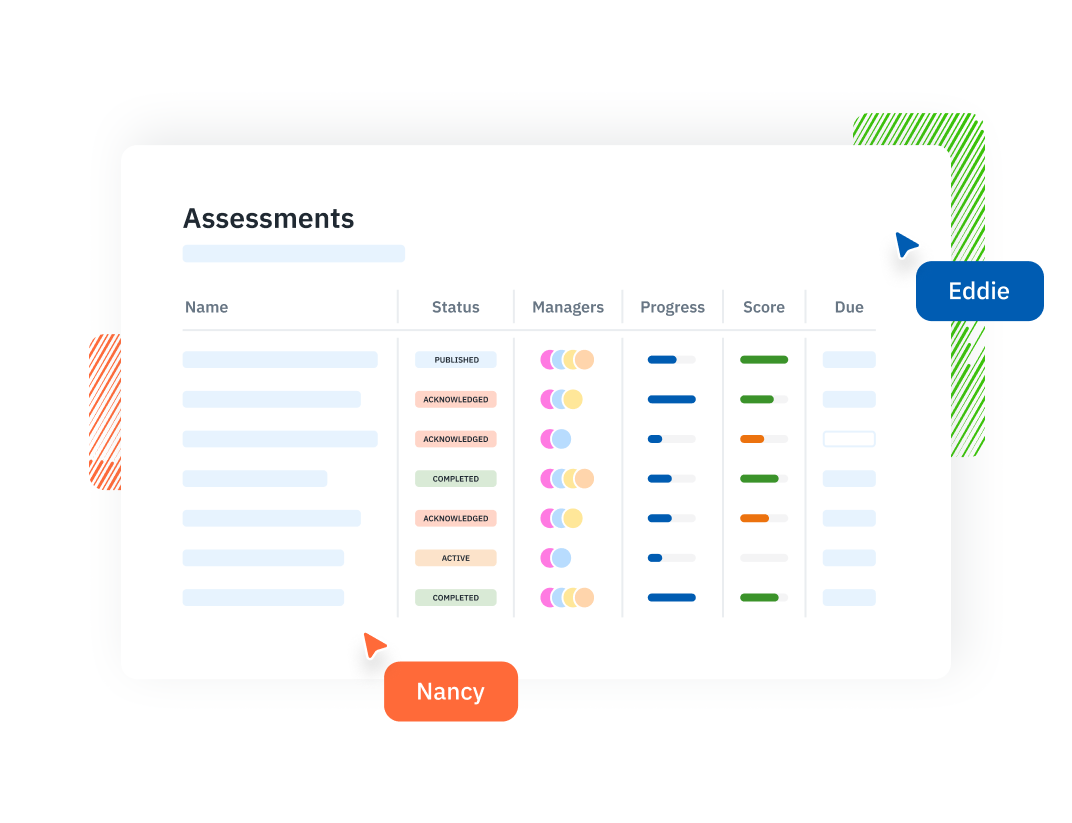
Launch assessments mapped to CSF 2.0 Categories and Subcategories across all six Functions in one campaign. Target department heads and control owners with structured questionnaires, and collect evidence inline so responses and proof stay connected. With a prebuilt CSF template library, teams can assess immediately, without months of questionnaire construction before the first campaign.

Learn More

Asset & Vendor Inventory

Manage a connected inventory that meets NIST CSF compliance.

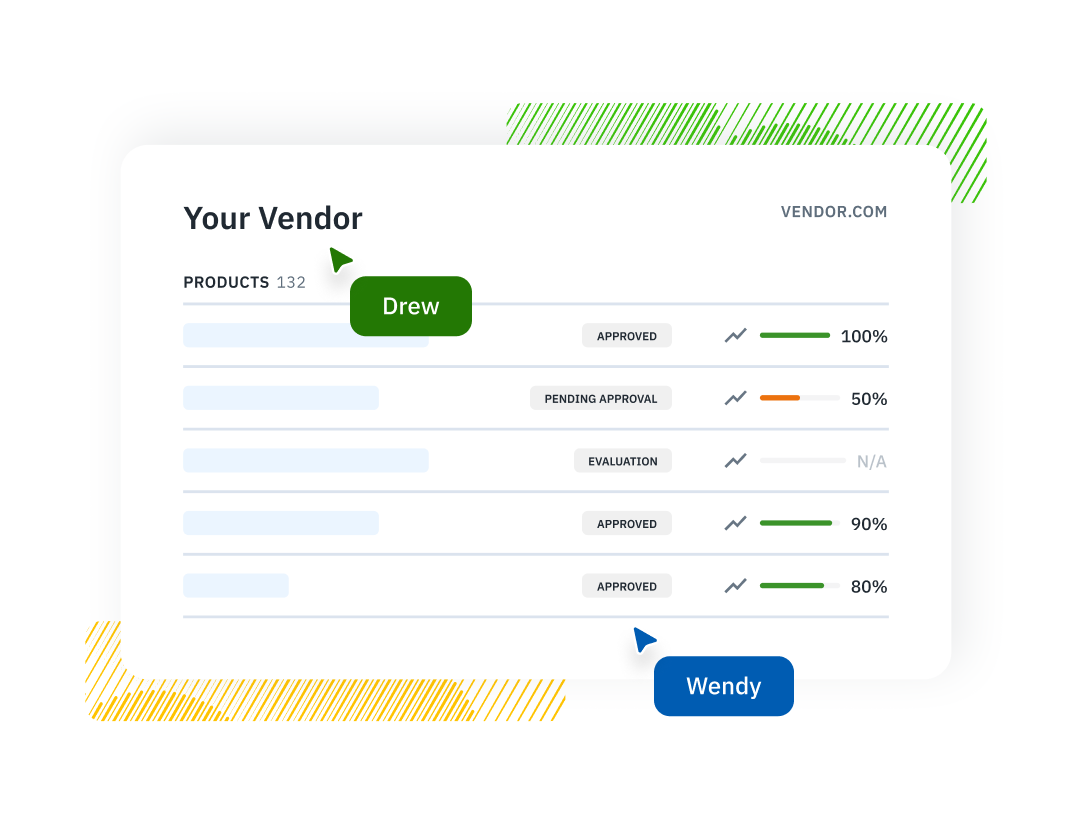
CSF's Identify Function requires knowing what you protect. Isora maintains connected inventories of systems, assets, vendors, and organizational units, each linked to its assessments, risks, and exceptions. Scope a new CSF assessment by data classification, system boundary, or business unit, and when a vendor serves a system in scope, its assessment results link to that system.

Learn More

Function-Level Risk

Trace every risk with lineage back to the Function and Category where it surfaced.

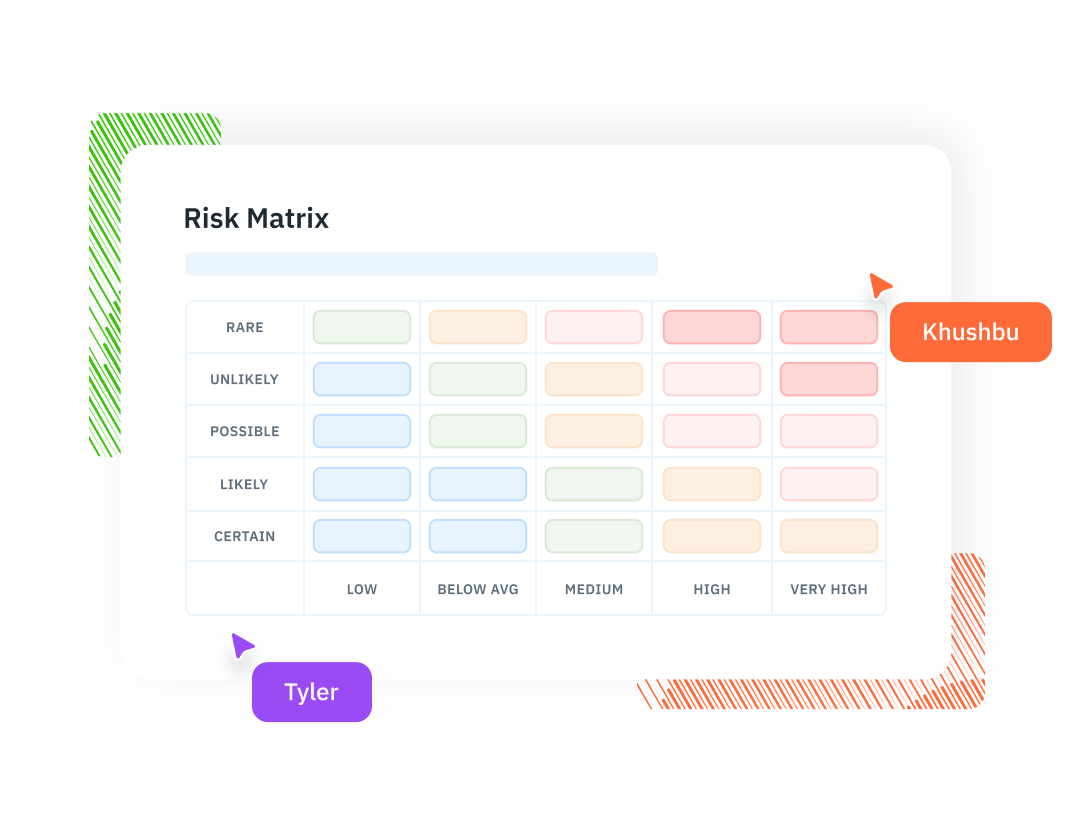
Publish assessment findings to the risk register with the CSF Function and Category they map to, the assessment that found them, and the system they affect. In Isora, a Protect control that isn't implemented, a Detect capability that doesn't exist, or a Govern policy that hasn't been reviewed becomes a tracked risk with an owner and a deadline. Meanwhile, the append-only audit log records every action across all six Functions.

Learn More

Posture Reporting

Report NIST CSF compliance posture to leadership from live data.

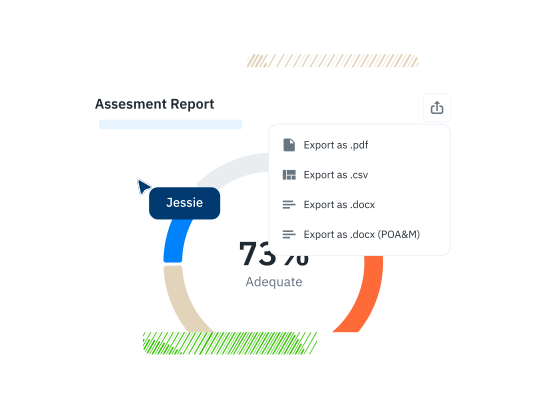
Generate reports and scorecards showing assessment completion, control status, and risk across all six NIST CSF Functions. With Isora GRC, teams can drill down from any summary metric to the underlying assessment response and evidence. Because the data is live, the board gets a current posture report, without anyone compiling it from six spreadsheets.
Learn More
Latest Content
Our latest content.
Stay ahead of the curve with our latest research on a diverse range of topics exploring the ever-changing world of governance, risk, and compliance.

Third-Party Risk Management Frameworks: How to Build and Govern a TPRM Program A third-party risk management (TPRM) framework is the structure an...

TPRM Maturity Model: How to Score Third-Party Risk A TPRM maturity model is a self-assessment framework to score how developed a third-party risk...

NIST CSF Tools and Solutions: Complete Guide NIST CSF tools and solutions help organizations automate the work of running a NIST Cybersecurity...

NIST CSF vs Other Frameworks: Comparison Guide and Mapping Resources The NIST Cybersecurity Framework (CSF) is a voluntary, risk-based cybersecurity...

NIST CSF Controls and Categories: Complete Reference Guide The NIST Cybersecurity Framework (CSF) organizes cybersecurity risk management into a...

NIST CSF Compliance: Governance, Implementation, and Assessment Readiness NIST CSF compliance means aligning a cybersecurity program with the...

Frequently Asked Questions
NIST CSF Compliance Software FAQs
Find the answers you need here, or chat with us.
Contact Sales
How does Isora support all six NIST CSF 2.0 Functions?

Isora’s prebuilt CSF questionnaire templates map to Categories and Subcategories across Govern, Identify, Protect, Detect, Respond, and Recover. Teams assess any or all Functions in a single campaign, and findings from every Function flow into the same risk register with Function-level lineage.

How does Isora handle the new Govern Function in CSF 2.0?

Isora assesses Govern like any other Function, through structured questionnaires targeting governance policies, risk management strategy, and oversight mechanisms. Findings flow into the risk register and reports, giving leadership visibility into governance maturity alongside operational security controls.

Does Isora include prebuilt NIST CSF questionnaires?

Yes. Isora includes questionnaire templates mapped to CSF 2.0 Categories and Subcategories, so teams launch assessments without building questionnaires from scratch. Templates are customizable: add organization-specific questions, adjust scoring, or combine CSF with other frameworks in a single assessment.

Can Isora manage CSF alongside NIST 800-53, GLBA, and other frameworks?

Yes. Isora supports CSF alongside NIST 800-53, GLBA, HECVAT, HIPAA, CMMC, and more in the same workspace. All frameworks share the same inventories, risk register, and reporting, so adding a second framework does not double the work.

What is the difference between NIST CSF and NIST 800-53?

NIST CSF is a voluntary framework that organizes cybersecurity activities across six Functions at a high level. NIST 800-53 is a detailed control catalog with over 1,000 controls, used primarily by federal agencies and organizations handling federal data. Many organizations use CSF as their program structure and map 800-53 controls underneath, and Isora supports both in the same workspace.

How does CSF 2.0 differ from CSF 1.1?

CSF 2.0, released February 2024, adds the Govern Function as a sixth pillar, extends the framework beyond critical infrastructure to all organizations, introduces organizational context and supply chain risk management, and restructures some Categories and Subcategories. Isora’s prebuilt CSF templates reflect the 2.0 structure.

Let’s Chat
See the GRC Assessment Platform in action
Book a Demo