




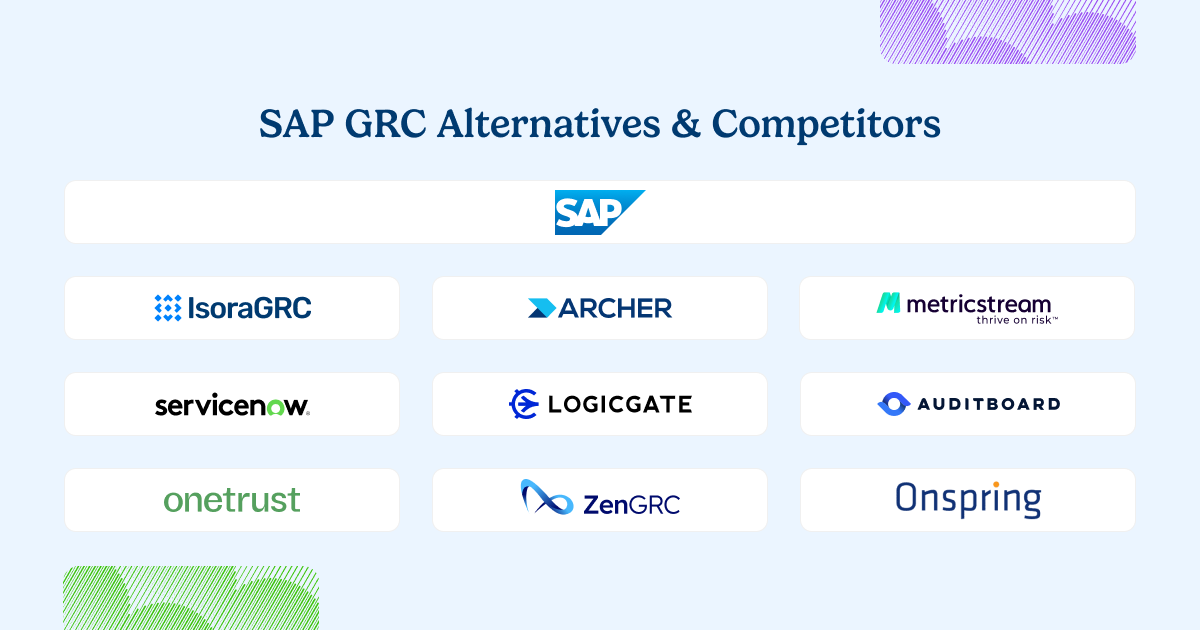
SAP GRC is widely used in enterprises that rely on SAP for core business processes. It’s tightly integrated with SAP environments and excels at access controls, audit logs, and financial compliance. SAP’s GRC product page lists threat detection and data protection tools, and the vendor coverage it states is business partner screening.
The platform is primarily designed for internal controls, and SAP describes collaboration across the three lines of defense. IT risk assessment workflows are not stated on SAP’s GRC product page as of September 2026.
SAP GRC belongs to the category of all-in-one enterprise GRC platforms—powerful for governance and audit, but ill-suited for agile, security-led risk management programs.
Why Teams Look for SAP GRC Alternatives
| Common Limitation | Why It’s a Problem | What to Look for Instead |
| Built for audit and compliance use cases | Security tools cover application threat detection and data protection, and vendor coverage is business partner screening | Purpose-built for IT and third-party risk management |
| Deeply tied to SAP architecture | Predefined integration and content target SAP S/4HANA, and SAP states access control also covers third-party systems | Lightweight platform that works independently of ERP tools |
| Rigid and complex | Long implementations, high admin overhead | Fast, no-code deployment with easy-to-use workflows |
| Poor usability for non-audit teams | Limited adoption beyond risk and finance roles | Platform that supports collaboration across the organization |
What to Look for in a SAP GRC Alternative
- Tools that support security assessments, not just financial controls
- Centralized risk and exception tracking tied to actual workflows
- A platform that’s independent of ERP systems and easy to deploy
- Designed for security teams and operational risk, not just governance and audit
- Broad adoption across technical and non-technical stakeholders
Top SAP GRC Alternatives
1. Isora GRC
| Category | Details |
| Best For | Security teams that need to operationalize IT and third-party risk management across assets, third-party vendors, and business units. |
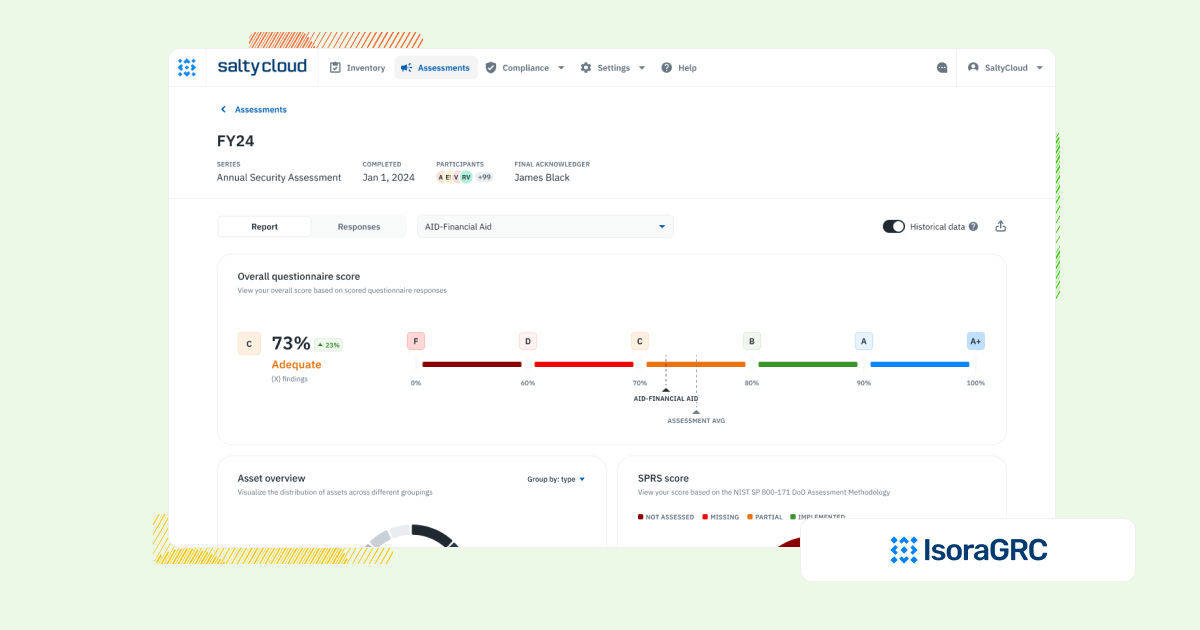
| Overview | Isora GRC is the GRC Assessment Platform™ built specifically for information security teams. It supports the full risk workflow, from assessments and questionnaires to risks, inventory, and reporting, without the complexity of legacy GRC tools or the limitations of audit-first platforms. |
| Strengths | Built for workflows, not checklists
✅ Supports assessments, inventory tracking, risk registers, and exceptions in a unified experience. Designed for org-wide adoption ✅ WCAG-compliant UX that requires no training and makes risk everyone’s job. Fast time-to-value ✅ Live in days or weeks, with no-code setup and minimal lift from IT. Flexible by default ✅ Customizable assessments, scalable categories, and framework mapping without heavy configuration. Scales across teams and vendors ✅ Works equally well for internal teams and third-party risk management programs. |
| Limitations | ⚠️ Not designed for legal, audit, or finance teams seeking one platform for enterprise-wide GRC
⚠️ May be too structured for teams looking to build one-off surveys or lightweight audits without repeatable workflows |
| When to Consider | If you need a modern risk platform built for continuous use, with workflows your security team will actually adopt, without the rigidity and ERP-dependence of audit-first enterprise GRC platforms. |
2. Archer IRM
| Category | Details |
| Best For | Large enterprises with centralized GRC teams and the budget to support long implementations and deep customization. |
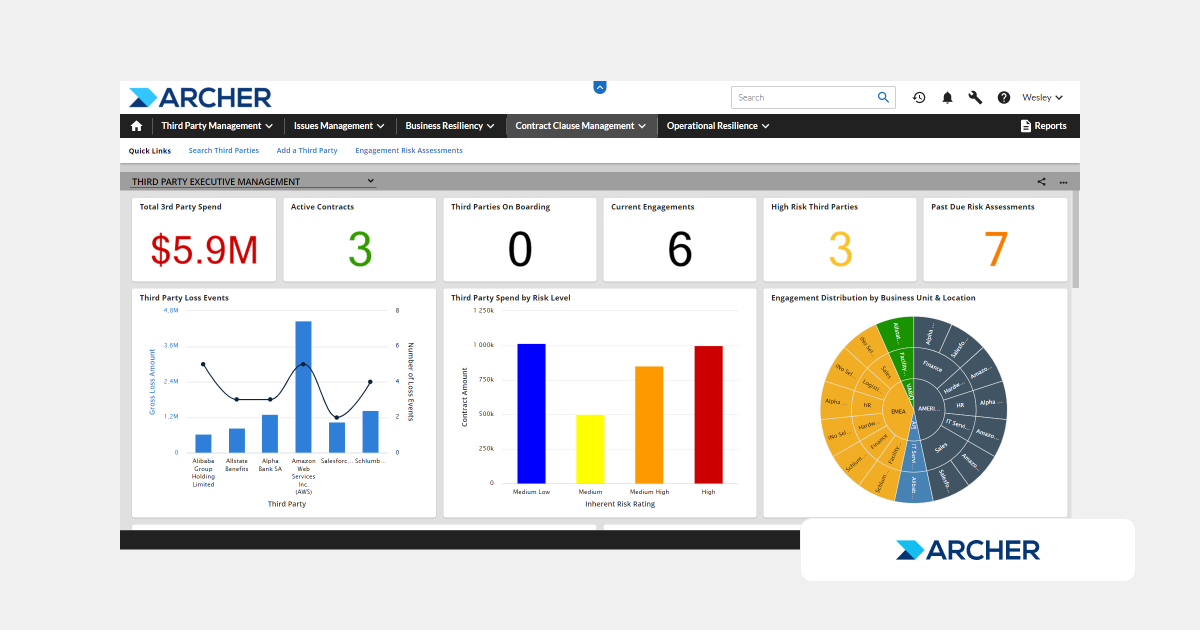
| Overview | Archer IRM is an enterprise GRC platform used to manage risk, audit, and compliance across large organizations. Like SAP GRC, it’s powerful but complex, often requiring dedicated staff, consultants, and months of setup to get usable workflows in place. |
| Strengths | ✅ Deep governance and compliance functionality
✅ Highly configurable for enterprise-wide programs |
| Limitations | ⚠️ Long implementation timelines and heavy admin overhead
⚠️ Security and vendor risk use cases ship with prebuilt content and are configured to your process during scoping |
| When to Consider | If you need a centralized, customizable governance platform. Archer also publishes an IT and security risk use case addressed to security and IT risk teams. |
| Other Comparisons | Archer IRM vs ServiceNow GRC vs Isora GRC
LogicGate vs Archer IRM vs Isora GRC ZenGRC vs Archer IRM vs Isora GRC |
3. MetricStream
| Category | Details |
| Best For | Large organizations that need to manage complex regulatory programs and cross-functional GRC at scale. |
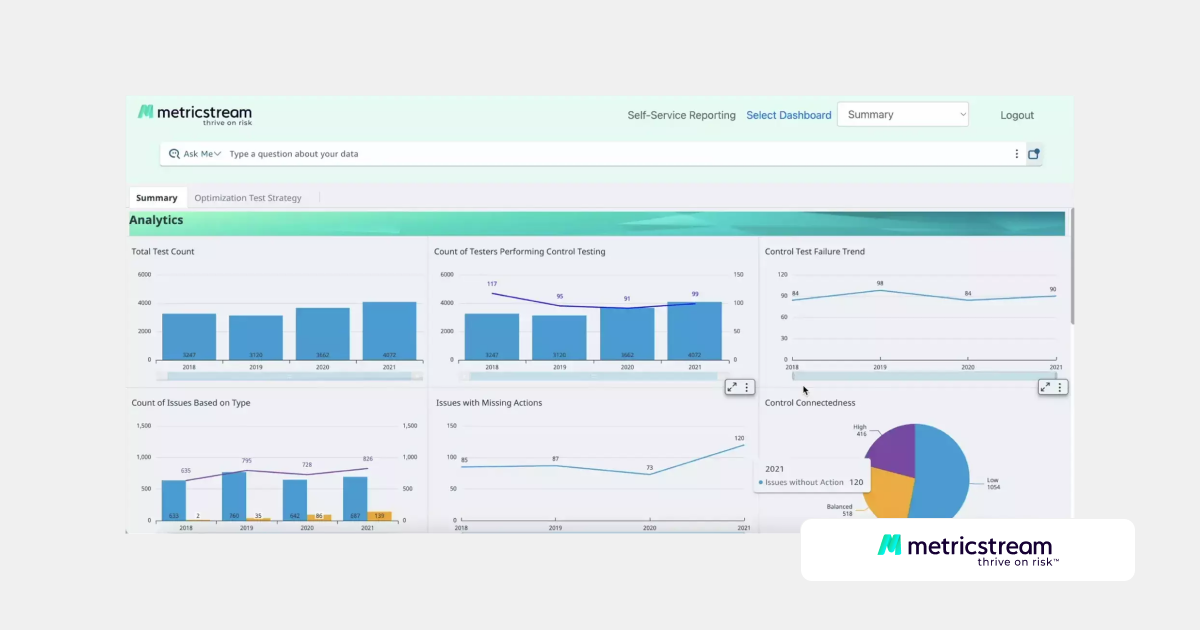
| Overview | MetricStream is a well-established GRC platform excellent in audit and governance. Like SAP GRC, it’s robust, and MetricStream lists IT risk assessments and a third-party risk product. |
| Strengths | ✅ Enterprise-grade GRC with strong reporting and audit tools
✅ Supports frameworks like NIST 800-53, ISO 27001, and SOX |
| Limitations | ⚠️ Steep learning curve and long implementation cycles
⚠️ Overbuilt for security teams focused on IT and vendor risk workflows |
| When to Consider | If your focus is enterprise governance. MetricStream also lists IT and cyber risk management with a central asset repository, and a third-party risk product. |
| Other Comparisons | MetricStream vs SAP GRC vs Isora GRC |
4. ServiceNow GRC
| Category | Details |
| Best For | Organizations already using ServiceNow for IT operations that want to layer in GRC functionality. |
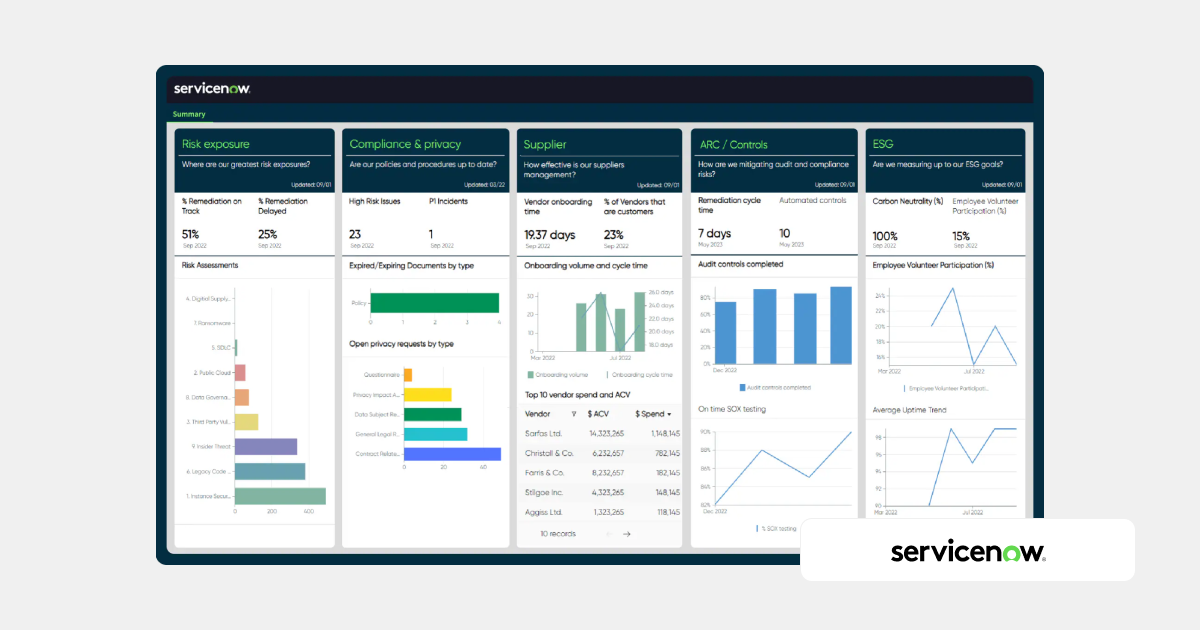
| Overview | ServiceNow GRC extends ServiceNow’s ITSM platform with risk and compliance capabilities. It integrates well with IT operations, and ServiceNow describes IRM as connecting risk and compliance across IT, cyber and business operations. |
| Strengths | ✅ Strong integration with ServiceNow’s service desk and incident response tools
✅ Useful for policy management and tracking risk events across IT systems |
| Limitations | ⚠️ Requires technical resources and configuration to stand up
⚠️ Built on the same platform as its ITSM products, with security risk assessments under Tech and Cyber Risk Management |
| When to Consider | If you’re already embedded in ServiceNow. ServiceNow lists automated IT and security risk assessments and a Third-party Risk Management product. |
| Other Comparisons | Archer IRM vs ServiceNow GRC vs Isora GRC
OneTrust vs ServiceNow GRC vs Isora GRC |
5. LogicGate
| Category | Details |
| Best For | Teams that want a flexible, no-code way to build their own GRC workflows over time. |
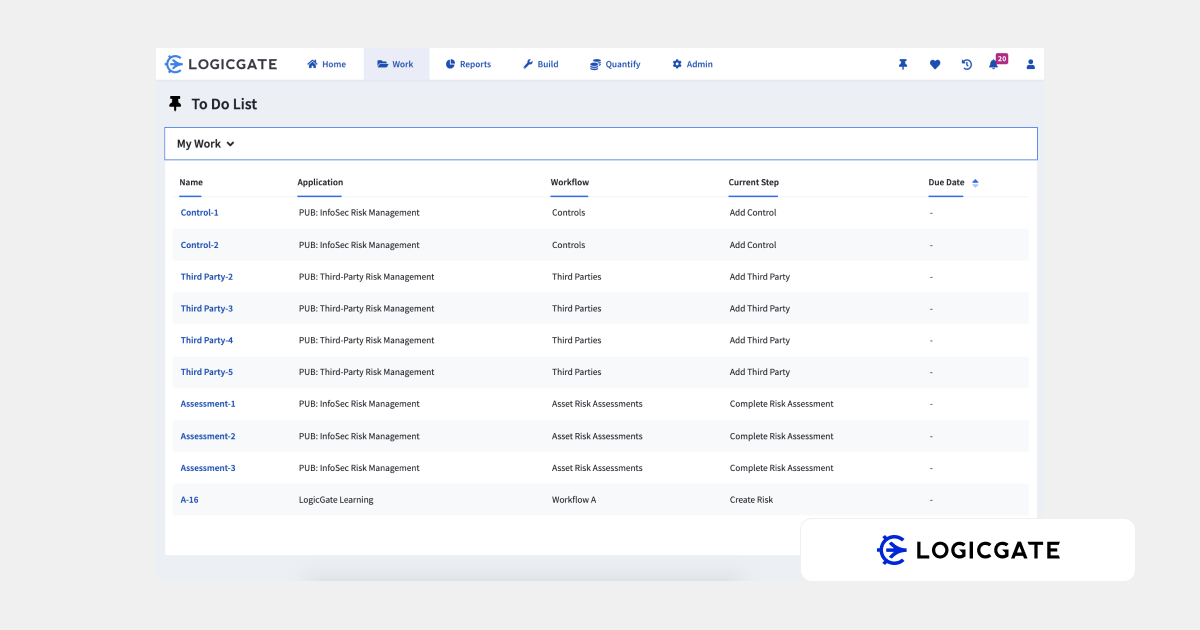
| Overview | LogicGate provides a drag-and-drop environment to create custom workflows for risk and compliance. Its site lists ready-made Applications for cyber risk, third-party risk, asset management and exceptions management. |
| Strengths | ✅ Highly configurable and adaptable to different risk processes
✅ Can support IT risk, vendor risk, and compliance frameworks |
| Limitations | ⚠️ Requires time and technical skill to configure workflows and reporting
⚠️ Prebuilt cyber and third-party risk Applications are licensed separately and run by Power Users, whom LogicGate calls platform administrators |
| When to Consider | If you want to build your own GRC program from scratch. LogicGate lists ready-made Applications for cyber risk and third-party risk. |
| Other Comparisons | LogicGate vs Archer IRM vs Isora GRC |
6. AuditBoard
| Category | Details |
| Best For | Internal audit and compliance teams that need a centralized platform to manage controls, documentation, and audit readiness. |
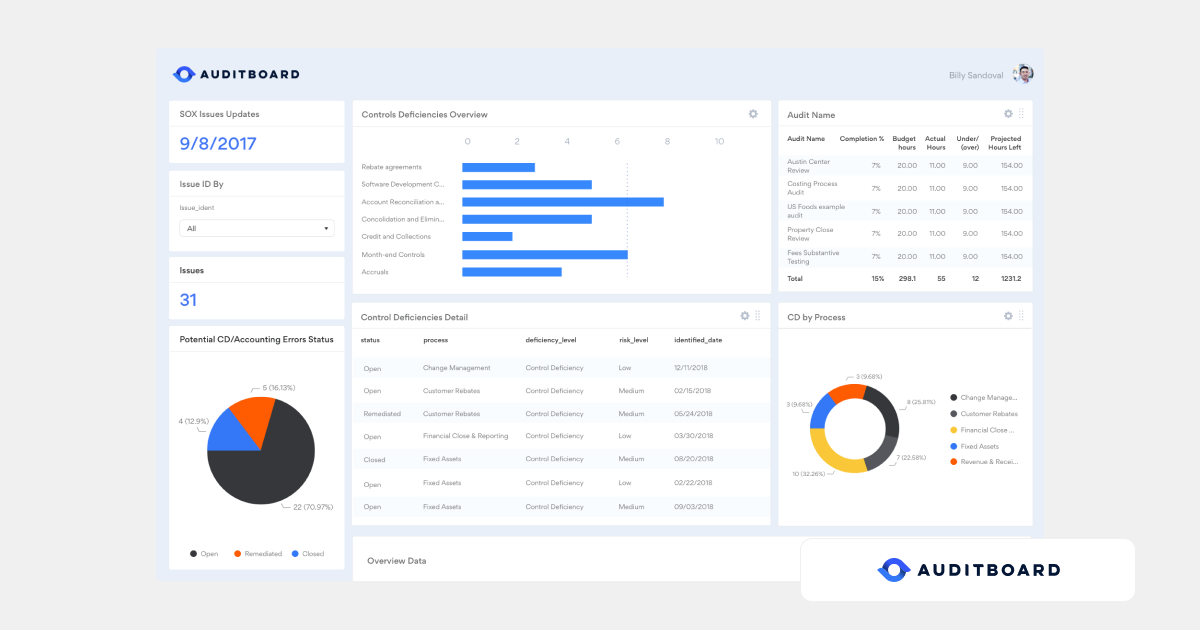
| Overview | Optro (formerly AuditBoard) is designed to streamline audit and SOX programs. It offers strong tools for control tracking and documentation, and it also lists IT & Cyber Risk Management and Third-Party Risk Management products. Optro’s IT risk and compliance page lists exceptions management for managing and remediating policy exceptions, as of September 2026. |
| Strengths | ✅ Easy-to-use platform for internal auditors and compliance professionals
✅ Strong control testing and documentation tools |
| Limitations | ⚠️ IT and vendor risk run as separate IT Risk Management and Third-Party Risk Management products
⚠️ Limited flexibility for non-audit teams needing dynamic workflows |
| When to Consider | If your primary focus is on audit tracking and compliance documentation. Optro also lists IT & Cyber Risk Management with asset intake and asset-level assessments. |
| Other Comparisons | AuditBoard vs ServiceNow GRC vs Isora GRC |
7. OneTrust GRC
| Category | Details |
| Best For | Organizations focused on privacy, data governance, and third-party risk. OneTrust also lists IT Risk Management. |
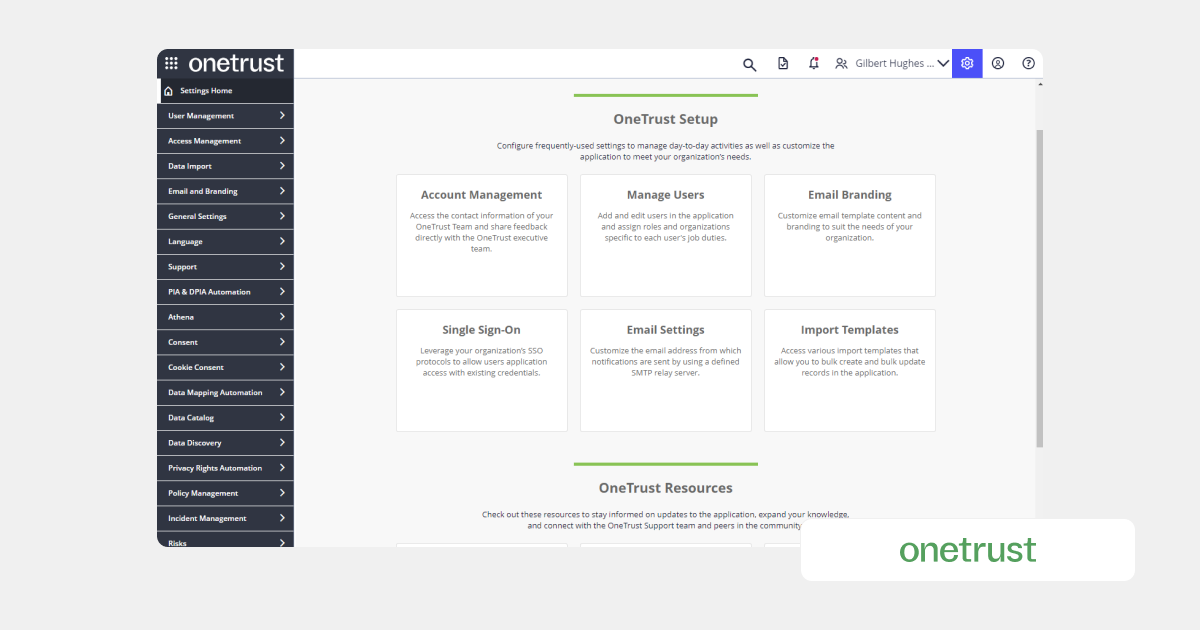
| Overview | OneTrust GRC extends the privacy platform with compliance and third-party risk tools. It is useful for regulatory reviews and vendor questionnaires, and it also lists IT Risk Management and an evergreen asset inventory. |
| Strengths | ✅ Good for vendor risk reviews and privacy-focused compliance programs
✅ Supports standard assessments like CAIQ and SIG |
| Limitations | ⚠️ IT risk management, an evergreen asset inventory and exception tracking are listed. OneTrust’s Tech Risk and Compliance page says UI-driven configuration simplifies configuration updates without the need for IT resources, as of September 2026
⚠️ Focused more on documentation and compliance than operational risk management |
| When to Consider | If your team prioritizes vendor privacy and compliance documentation. OneTrust also lists IT Risk Management and exception tracking with automated follow-up. |
| Other Comparisons | OneTrust vs ServiceNow GRC vs Isora GRC |
8. ZenGRC
| Category | Details |
| Best For | Small to midsize teams starting out with audit and compliance tracking. |
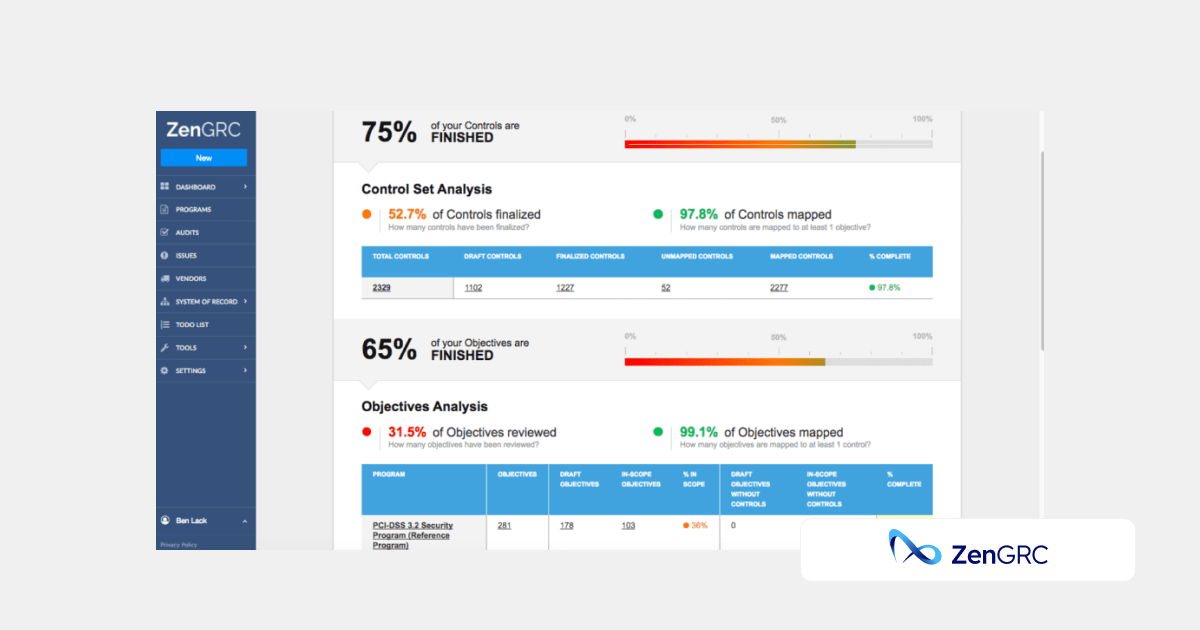
| Overview | ZenGRC offers a lightweight platform for managing compliance frameworks and audit documentation. It is fast to launch and easy to use, and it also lists Risk Management and Vendor Management modules with vendor questionnaires. |
| Strengths | ✅ Fast setup and easy-to-use interface for audit and compliance tracking
✅ Useful for organizing frameworks like SOC 2, ISO 27001, and NIST |
| Limitations | ⚠️ Risk and vendor management modules are listed. ZenGRC’s API documentation lists an Exceptions object with owners, status and stop dates, as of September 2026
⚠️ Lists Risk Management with automated workflows and customizable vendor questionnaires |
| When to Consider | If you need a simple tool for compliance documentation. ZenGRC also lists Risk Management and Vendor Management modules. |
| Other Comparisons | ZenGRC vs AuditBoard vs Isora GRC |
9. Onspring
| Category | Details |
| Best For | Teams that want to create their own GRC processes without code, especially in legal, audit, or compliance departments. |
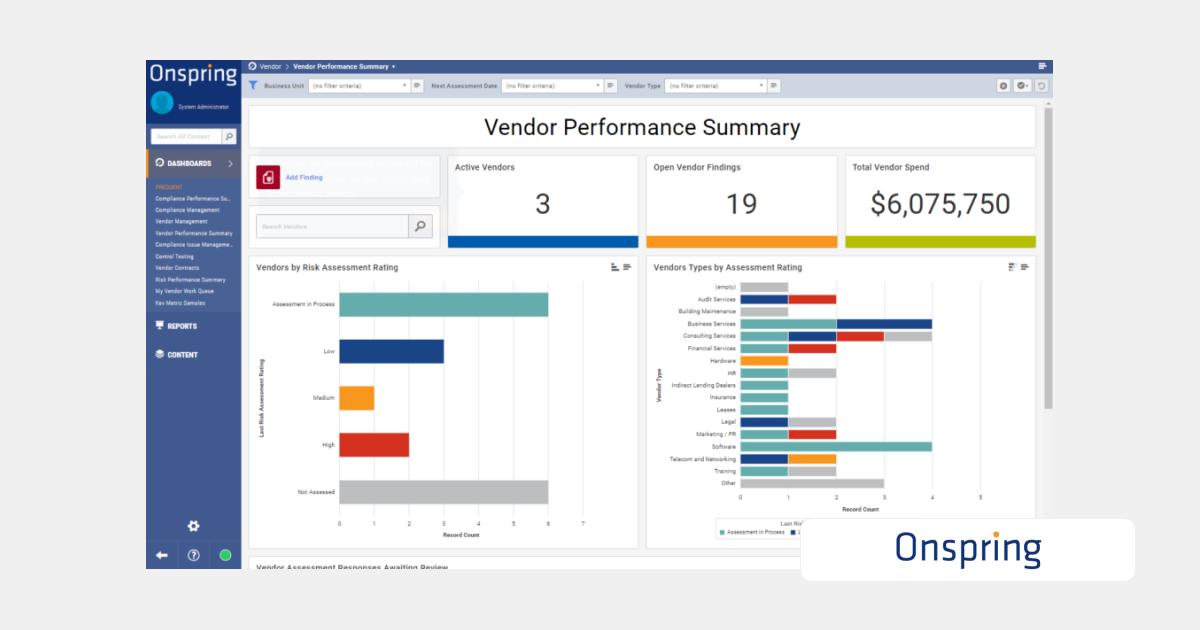
| Overview | Onspring is a no-code platform that helps teams design risk and compliance workflows from the ground up. It offers strong flexibility, and Onspring also lists Risk Management and Third-Party Risk Management products. |
| Strengths | ✅ Fully customizable, visual workflow builder for governance and risk
✅ Good for cross-departmental process automation in non-technical teams |
| Limitations | ⚠️ Slower time-to-value for teams needing fast deployment and predefined workflows
⚠️ Lists risk assessment workflows and a third-party lifecycle, and Onspring states it does not include risk register content |
| When to Consider | If your org wants to build its own GRC ecosystem. Onspring also lists a Third-Party Risk Management product covering the vendor lifecycle from inventory to offboarding. |
| Other Comparisons | Onspring vs AuditBoard vs Isora GRC |
What Our Customers Say About Isora GRC
Security teams at top institutions are using Isora GRC to replace legacy tools and manual processes with intuitive workflows and actionable insight.
FAQs
What are some alternatives to SAP GRC?
SAP GRC is part of a category of enterprise governance platforms focused on access control, financial compliance, and audit logging—especially within SAP environments. Alternatives like Isora GRC offer lighter, purpose-built workflows for security teams managing IT and vendor risk without the overhead of ERP integration.
Why do teams switch from SAP GRC to platforms like Isora GRC?
SAP GRC excels in internal controls and audit-readiness. IT risk assessment workflows are not stated on SAP’s GRC product page as of September 2026. Teams switch to Isora GRC when they need a system that supports assessments, risk tracking, and vendor management—without relying on SAP infrastructure or consultants.
Does Isora GRC replace tools like SAP GRC or complement them?
For most security teams, Isora GRC fully replaces SAP GRC in the areas of IT and third-party risk management. It provides structured workflows for assessments, inventories, and exceptions—offering more flexibility and user-friendliness for teams outside finance or audit.
Which platform is better for managing decentralized security risk?
SAP GRC is effective for structured audit controls, and SAP states its access control tools work across SAP and third-party systems. Isora GRC was built for distributed teams that need to collaborate on assessments, manage risk inventories, and track exceptions across the organization.
What should I look for in a SAP GRC alternative?
Focus on platforms that offer assessment delivery, risk register management, exception workflows, and usability across technical and business users. Isora GRC delivers all of that in a lightweight platform that doesn’t require ERP alignment or lengthy implementation.

This content is for informational purposes only and does not constitute legal or compliance advice. See our full disclaimer.
