




Drata Alternatives: Compare GRC Platforms for IT and Vendor Risk
Drata is a compliance automation platform built for security and GRC teams maintaining more than one certification at a time. Controls are defined once and proven continuously by automated tests fed from its integrations, and its help center says Drata “allows you to pursue or maintain multiple security frameworks without duplicating efforts.” Its pre-mapped frameworks include SOC 2, ISO 27001, HIPAA, PCI DSS, NIST 800-53, NIST CSF 2.0, CMMC 2.0 and NIST SP 800-171.
Drata acquired SafeBase, so the trust center and AI Questionnaire Assistance are now Drata’s own product line. For federal buyers, the FedRAMP Marketplace lists the Drata Trust Management Platform as a FedRAMP Certified 20x offering at Class B (Low), as of October 2026. When the main job is a SOC 2 or ISO 27001 report backed by automated evidence, Drata is built for it.
Drata’s AWS Marketplace listing prices a platform fee of $25,000 per 12 months, with capacity for a 100-FTE organization, plus $7,500 per framework. Pricing runs across two platform tracks plus add-on modules, so a quote has to be read line by line.
Tools like Drata are part of the security compliance automation category, built around certifications, evidence, and automated control tests. When a security program runs on recurring assessments sent to owners across departments, systems, and vendors, a team may need a platform built around that work.
Why Teams Look for Drata Alternatives
Teams look for an alternative to Drata after running into one or more common limitations.
| Common Limitation | Why It’s a Problem | What to Look for Instead |
| Frameworks outside its list | Drata’s published framework list leaves out HECVAT, GLBA, TX-RAMP and StateRAMP/GovRAMP, as of October 2026. Its help center also documents custom frameworks | Prebuilt HECVAT questionnaires and content for the frameworks your sector reports against |
| Unit-level questionnaires not documented | Drata’s help center documents questionnaires sent to vendors, a one-time survey that builds the risk register, and control owners with required approvals. Questionnaires sent to its own departments are not documented there, as of October 2026 | Assessments sent to owners across departments, systems, and vendors |
| Exception tracking | Drata’s help center suggests adding a risk category called Exception “to track active risk exceptions,” and documents personnel exclusions with a business rationale. A dedicated exception register is not documented there, as of October 2026 | Built-in risk and exception tracking |
What to Look for in a Drata Alternative
When evaluating a Drata alternative, the factors an organization can consider depend on its use case. Still, here’s what an alternative should cover:
- Assessments as the core unit of work, sent to owners across departments, systems, and vendors
- Coverage of the frameworks you report against, including HECVAT, GLBA, and state mandates such as TX-RAMP where they apply
- Exception tracking with its own owners, approvals, and expiration dates
- Assessment results that roll into risk tracking, exceptions, and reporting
- An interface that respondents outside security can use
- A quote that maps clearly to the frameworks and modules you need
Make sure to ask potential vendors about each of these capabilities, before you sign a contract.
Top Drata Alternatives
Drata vs. Isora GRC
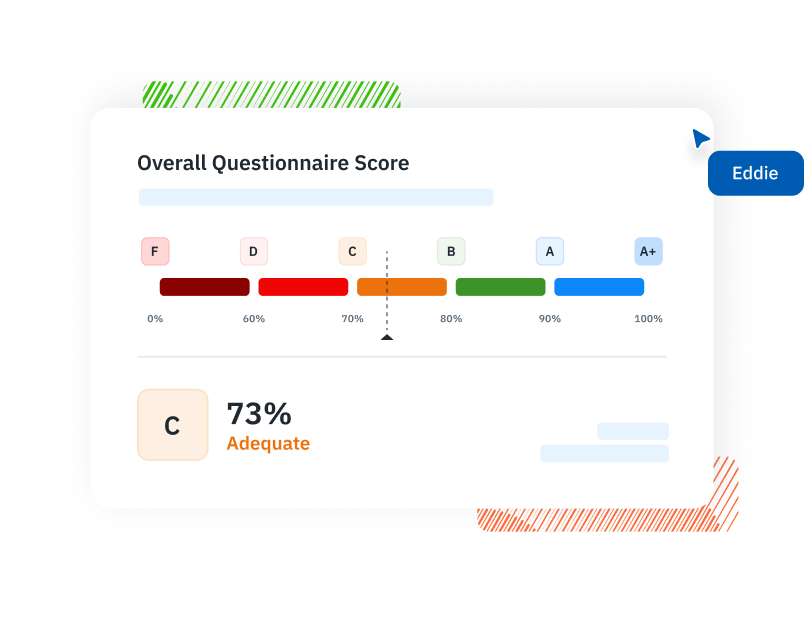
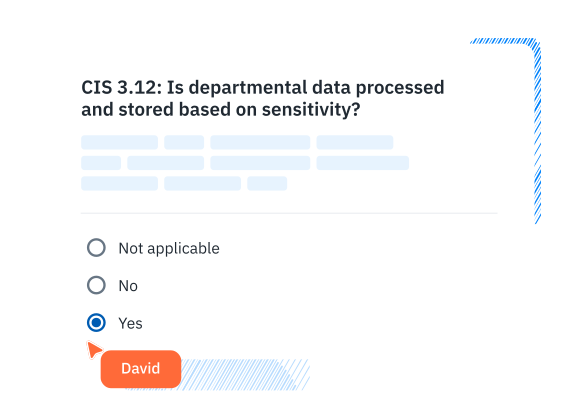
Isora GRC is the GRC Assessment Platform™ built specifically for information security teams. It supports the full risk workflow, from assessments and questionnaires to risks, inventory, and reporting. It includes prebuilt HECVAT questionnaires, and its HECVAT uploader imports completed HECVAT 3 and HECVAT 4 files.
Best for: Security teams that need to operationalize IT and third-party risk management across assets, third-party vendors, and business units.
| Isora GRC | |
| Strengths | Built for workflows, not checklists
✅ Supports assessments, inventory tracking, risk registers, and exceptions in a unified experience. Designed for org-wide adoption ✅ WCAG-compliant UX built for respondents outside security, which makes risk everyone’s job. Fast time-to-value ✅ Live in days or weeks, with no-code setup and minimal lift from IT. Flexible by default ✅ Customizable assessments, scalable categories, and framework-aligned questionnaires without heavy configuration. Scales across teams and vendors ✅ Assesses internal teams and third-party vendors from one place. |
| Limitations | ⚠️ Not designed for legal, audit, or finance teams seeking one platform for enterprise-wide GRC
⚠️ May be too structured for teams looking to build one-off surveys or lightweight audits without repeatable workflows |
Drata vs. Vanta
Vanta helps companies automate audit evidence collection and meet compliance goals. Like Drata, it makes certifications easier. Its Risk Management product lists a risk register where teams “assign an owner, score inherent risk, set a treatment plan, and score residual risk,” and its Third Party Risk Management product lists a centralized vendor inventory.
Best for: Small teams and startups looking to get compliant fast with minimal manual work.
| Vanta | |
| Strengths | ✅ Automated integrations and fast audit preparation
✅ Pre-built risk library for companies new to risk assessments |
| Limitations | ⚠️ Vanta’s published framework list leaves out HECVAT, GLBA, TX-RAMP and StateRAMP/GovRAMP, as of October 2026
⚠️ Vanta’s pricing page names its tiers and asks buyers to request personalized pricing, as of October 2026 |
| Other Comparisons | Drata vs Vanta vs Isora GRC |
Drata vs. Secureframe
Secureframe is a compliance automation platform with automated evidence collection, continuous monitoring, and risk management. Secureframe says customers get “guidance from more than 30 in-house compliance experts and former auditors,” and its Secureframe Defense product is “designed for the Defense Industrial Base” to protect CUI and meet CMMC requirements. In an article on code-level controls, its help center points to Secureframe’s exception or risk acceptance workflow, which captures the business justification.
Best for: Teams getting certified quickly, including defense contractors working toward CMMC.
| Secureframe | |
| Strengths | ✅ Its frameworks page names the FTC Safeguards Rule, TX-RAMP, and GovRAMP
✅ Secureframe Defense automates the SSP, POA&M, and SPRS artifacts that CMMC requires |
| Limitations | ⚠️ HECVAT is not among the frameworks on Secureframe’s frameworks page, as of October 2026 |
Drata vs. Sprinto
Sprinto is a compliance automation platform. Its frameworks page says “Sprinto helps fast-growing teams get certified faster and stay continuously compliant without rebuilding controls as they grow.” Its AWS Marketplace listing prices a Starter Platform at $7,500 per 12 months for up to 100 employees, plus $2,000 for the first framework, and its pricing page lists additional frameworks as an add-on.
Best for: Fast-growing SaaS companies getting certified quickly.
| Sprinto | |
| Strengths | ✅ Frameworks including SOC 2, ISO 27001, HIPAA, and PCI DSS
✅ Audit management, vendor risk management, and a trust center among its products |
| Limitations | ⚠️ Sprinto’s frameworks directory shows 22 entries under a “200+ frameworks” heading, and HECVAT, TX-RAMP and StateRAMP/GovRAMP are not among the 22, as of October 2026
⚠️ Sprinto’s Developer API is in beta and limited to 10 requests per minute, per IP address and per API key, as of October 2026 |
| Other Comparisons | Sprinto vs Vanta vs Isora GRC |
Drata vs. Hyperproof
Hyperproof focuses on control management and compliance across many frameworks, and says it offers “160+ pre-built frameworks.” Its Risk Management product lists a risk register, risk assessments and a customizable intake survey that collects risk signals from employees, partners, and vendors. Its vendor risk management capabilities include tailored risk and security questionnaires sent to vendors.
Best for: Compliance teams managing multiple frameworks and tracking evidence across controls.
| Hyperproof | |
| Strengths | ✅ Tracks controls across multiple compliance frameworks
✅ Automates evidence collection through its Hypersyncs data connectors ✅ Hyperproof Gov runs in what Hyperproof calls a FedRAMP Certified Class C (Rev5) environment, as of October 2026 |
| Limitations | ⚠️ HECVAT is not among the frameworks listed on Hyperproof’s frameworks page, as of October 2026 |
| Other Comparisons | Hyperproof vs Drata vs Isora GRC |
Drata vs. OneTrust GRC
OneTrust GRC was built privacy-first and extended into GRC, third-party risk, and AI governance. Vendors, assets, entities, and processing activities share one inventory. Its Tech Risk and Compliance page lists IT Risk Management and an evergreen asset inventory, and says OneTrust offers “out-of-the-box support for 55+ frameworks.”
Best for: Large enterprises that want privacy, governance, and third-party risk in one suite.
| OneTrust GRC | |
| Strengths | ✅ Strong privacy and regulatory compliance features
✅ One inventory shared by vendors, assets, entities, and processing activities |
| Limitations | ⚠️ OneTrust’s pricing page says each solution package has one or more usage meters, as of October 2026 |
| Other Comparisons | Drata vs OneTrust vs Isora GRC |
Drata vs. Optro
Optro (formerly AuditBoard) describes itself as AI-powered GRC software with audit, risk, infosec and compliance solutions, and says it is trusted by over 50% of the Fortune 500. Its IT & Cyber Risk Management product lists business impact assessments at the asset level, and its Third-Party Risk Management product bundles multiple vendor questionnaires into a single task and generates risk scores from the responses. Optro’s risk solution says it can push risk ownership to the front line.
Best for: Internal audit and SOX teams managing control documentation and audit trails.
| Optro | |
| Strengths | ✅ Great for internal audit processes and control testing
✅ Preloaded library of 30+ frameworks, including SOC 2, ISO 27001, and GDPR |
| Limitations | ⚠️ Optro’s pricing page asks buyers to request pricing and lists no price, as of October 2026
⚠️ HECVAT is not named on the Optro product pages checked, as of October 2026 |
| Other Comparisons | ZenGRC vs AuditBoard vs Isora GRC |
What Customers Say About Isora GRC
Security teams use Isora GRC to replace manual processes with intuitive workflows and actionable insight.
SaltyCloud makes Isora GRC, one of the products compared here. The assessments are our own, so confirm current features and pricing with each vendor before you decide.
FAQs
What are some alternatives to Drata?
Drata is a compliance automation platform built around controls, automated tests, and evidence for certifications such as SOC 2 and ISO 27001. Alternatives include Vanta, Secureframe, and Sprinto among compliance automation peers, Hyperproof for multi-framework compliance programs, and OneTrust GRC and Optro among enterprise GRC suites. Isora GRC is a GRC Assessment Platform™ for security teams that run recurring assessments across their own departments, systems, and vendors.
How does Drata compare with Vanta?
Drata and Vanta are both security compliance automation platforms that run automated tests against the systems a customer connects. Both published framework lists leave out HECVAT, GLBA, TX-RAMP and StateRAMP/GovRAMP, as of October 2026. They differ in what pricing they publish: Drata’s AWS Marketplace listing prints a platform fee and a per-framework price, and Vanta’s pricing page names its tiers and asks buyers to request personalized pricing. For a three-way view, see Drata vs Vanta vs Isora GRC.
How much does Drata cost?
Drata’s AWS Marketplace listing prices a platform fee of $25,000 per 12 months, with capacity for a 100-FTE organization, plus $7,500 per framework. Drata’s pricing runs across two platform tracks plus add-on modules, so a quote has to be read line by line. Buyers should confirm current pricing with Drata.
Does Drata support HECVAT?
HECVAT is not on the framework list in Drata’s help center, as of October 2026, and neither are GLBA, TX-RAMP or StateRAMP/GovRAMP. The list does name CCPA, and FFIEC as a requirements-only framework. Drata’s help center also documents custom frameworks, so higher-ed teams should ask Drata directly how it would handle a HECVAT. Isora GRC includes prebuilt HECVAT questionnaires, and its HECVAT uploader imports completed HECVAT 3 and HECVAT 4 files.
What is the difference between Drata and Isora GRC?
Drata defines controls once and proves them continuously with automated tests fed from its integrations. Its help center also documents AI features, such as AI control suggestions for policies and a TPRM Agent that analyzes vendor documents. Isora GRC is a GRC Assessment Platform™ built around assessments of departments, applications, and third-party vendors, with inventory, risks, exceptions, and reports attached to the assessment data. Isora repeats on an assessment cadence and ships no AI features, so a team that wants continuous, integration-driven control monitoring or AI-assisted compliance work should look at Drata.
Why do teams switch from Drata to Isora GRC?
Isora GRC fits teams whose security program runs on recurring assessments rather than audit cycles, that need HECVAT or GLBA content or a TX-RAMP vendor assessment, or that want assessment work to reach owners across the organization. Its WCAG-compliant interface is built for respondents outside security, and Isora tags each question to the controls it addresses across frameworks, with reports that roll up CMMC readiness and SPRS scores.
Does Isora GRC replace or complement Drata?
Isora GRC runs alongside Drata rather than replacing it. Drata proves the security team’s own posture to an auditor, and Isora GRC runs assessments across the departments and systems the security team does not operate, so the two cover different populations. Isora GRC does not name SOC 2, so a team that needs a SOC 2 report should keep a compliance automation platform such as Drata.
What should I look for in a Drata alternative?
Look for a platform that makes the assessment the core unit of work and covers the frameworks you report against, including HECVAT, GLBA, and state mandates such as TX-RAMP where they apply. You’ll also want exception tracking with its own owners and approvals, assessment results that roll into risk tracking and reporting, and a quote that maps clearly to the frameworks and modules you need. Isora GRC was built for assessment-led security programs.
For a framework to evaluate GRC platforms before a demo, download our GRC Buyer’s Guide for Information Security Teams.

This content is for informational purposes only and does not constitute legal or compliance advice. See our full disclaimer.
 Other Relevant Content