

Woot!
We got your request. Hang on tight and we'll get back to you!
 Assessment Management
Run structured security assessments across systems, teams, and vendors—all from one place.
Assessment Management
Run structured security assessments across systems, teams, and vendors—all from one place.
 Questionnaires & Surveys
Launch structured questionnaires and collect evidence from the people closest to each control.
Questionnaires & Surveys
Launch structured questionnaires and collect evidence from the people closest to each control.
 Reports & Scorecards
Turn assessments into audit-ready reports and actionable insights your team can actually use.
Reports & Scorecards
Turn assessments into audit-ready reports and actionable insights your team can actually use.
 Inventory Management
Maintain a connected inventory of vendors, assets, and systems linked to assessments and risks.
Inventory Management
Maintain a connected inventory of vendors, assets, and systems linked to assessments and risks.
 Exception Management
Log, track, and resolve policy exceptions so nothing falls through the cracks during audits.
Exception Management
Log, track, and resolve policy exceptions so nothing falls through the cracks during audits.
 Risk Management
Turn assessment findings into a living risk register with owners, remediation plans, and full lineage.
Risk Management
Turn assessment findings into a living risk register with owners, remediation plans, and full lineage.
 Information Security Risk Management (ISRM)
Run assessments across units and systems, maintain IT asset inventories, and collaborate on a shared risk register—all in one place.
Information Security Risk Management (ISRM)
Run assessments across units and systems, maintain IT asset inventories, and collaborate on a shared risk register—all in one place.
 Third-Party Security Risk Management (TPSRM)
Track vendors, send security questionnaires, and manage third-party risk with built-in workflows and a centralized inventory.
Third-Party Security Risk Management (TPSRM)
Track vendors, send security questionnaires, and manage third-party risk with built-in workflows and a centralized inventory.






































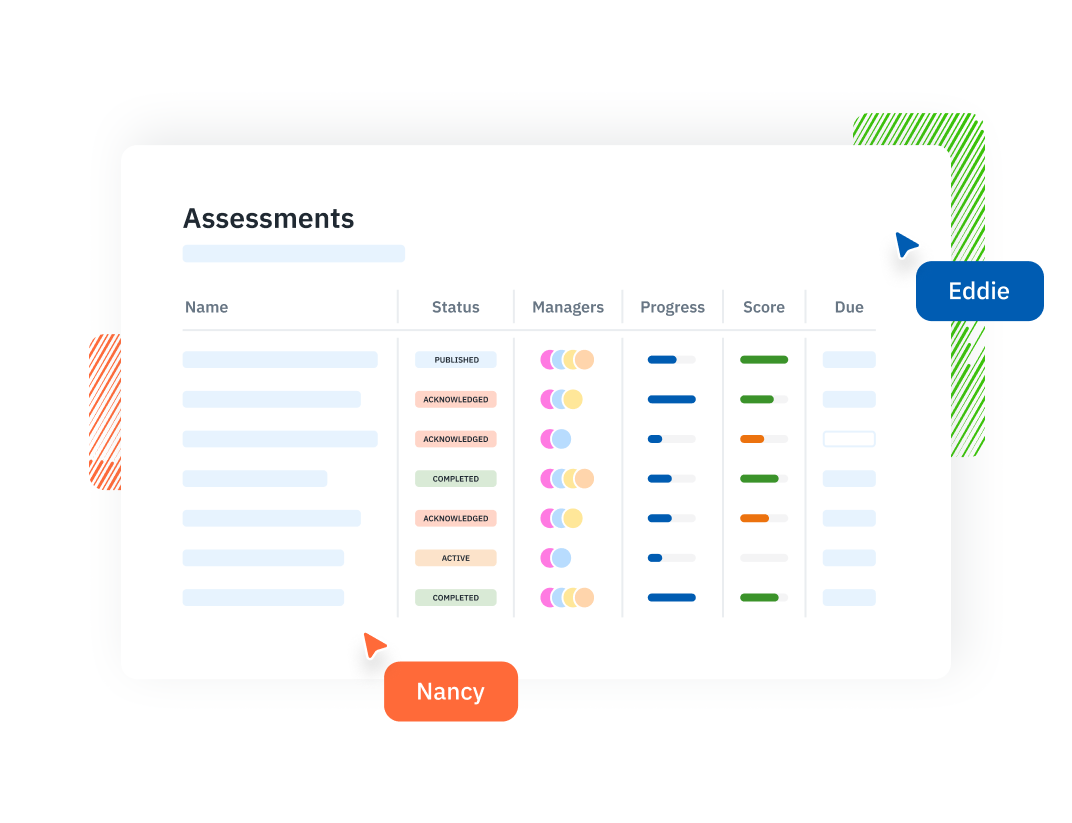
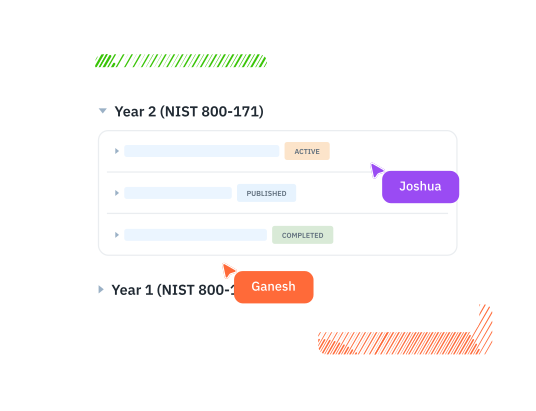
Launch structured assessments across departments, agencies, and vendors. Map assessments to the eighteen NIST 800-53 families CJIS covers. Assign assessment questions to control owners who can attach documents and evidence to every response.
Turn any assessment response into findings that stay linked to questionnaires, security controls, frameworks, and IT assets. Assign ownership, score likelihood-and-impact, set remediation milestones, and track each risk, from identified to remediated. Record every change in an audit log to ensure total accountability and complete transparency.
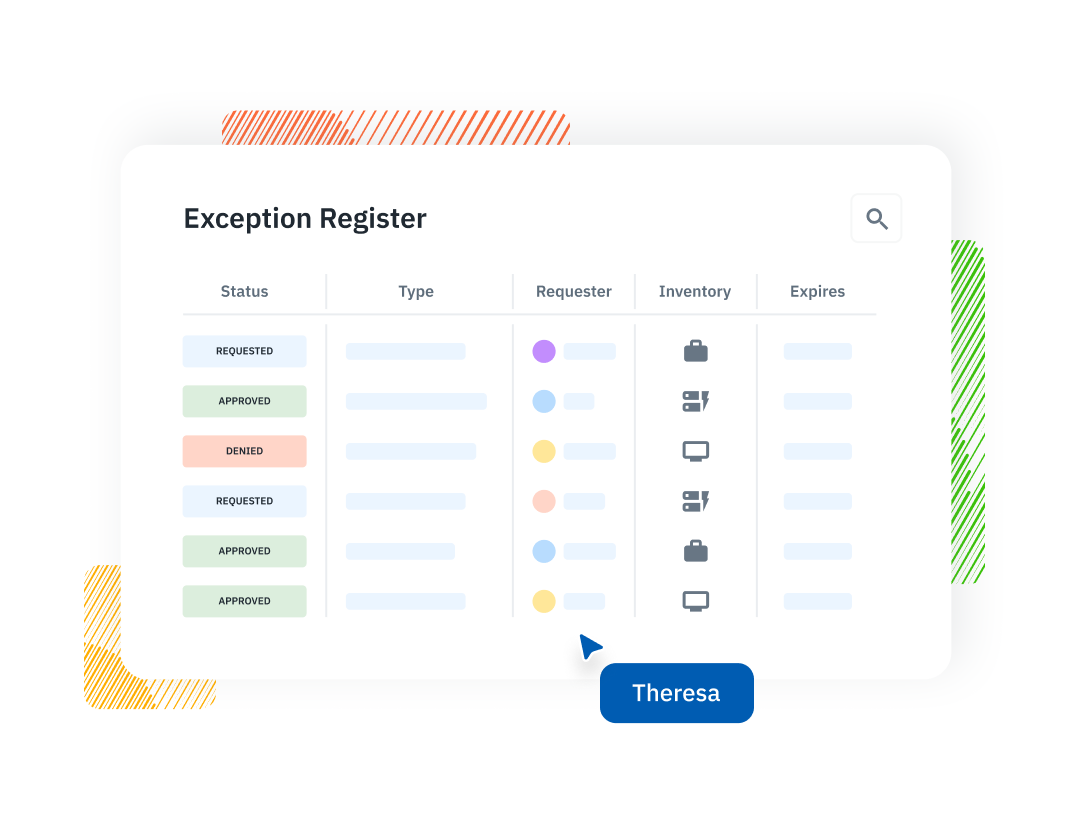
Log every risk exception as a first-class record linked to assets, vendors, and applications. Attach justifications, approvers, compensating controls, and expiration dates. Set automated review reminders to renew or retire approved deviations so they don’t lapse into audit findings.
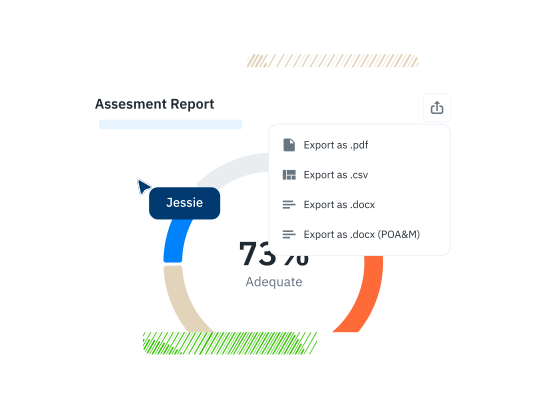
Generate reports and scorecards from assessments, risk register entries, tracked exceptions, and inventory records. Track completion rates and assessment scores by department or agency, with risk distribution and remediation progress all in one view. When an auditor asks whether a control is satisfied, trace its lineage from requirement to assessment question to response, with evidence attached. Then, simply export the report to PDF or CSV and deliver the audit package.