



ZenGRC Alternatives: Compare GRC Platforms for IT and Vendor Risk
ZenGRC is a multi-framework GRC platform for compliance, risk, and audit programs. Its product page lists Audit Management, Compliance, Risk Management and Vendor Management capabilities, and its framework content registry says ZenGRC “can support any framework and provide content for over 30 various standards and regulations.”
ZenGRC describes itself as a platform “built for lean teams managing multiple frameworks.” It includes an AI assistant, GRACI, and AI-powered control assessments without a separate AI module, and in February 2026 it announced a HITRUST MyCSF integration that submits evidence directly to HITRUST’s assessment platform. According to its pricing post, ZenGRC charges one flat rate with unlimited users, frameworks, and vendors, and does not publish a public price list.
For federal buyers, the FedRAMP Marketplace lists Federal ZenGRC, offered by Steel Patriot Partners, as Legacy FedRAMP Ready at Class C (Moderate). The listing dates that status to December 16, 2025 and shows no authorizations, as of October 2026. FedRAMP moved Ready listings to the Legacy FedRAMP Ready status in July 2026, so agencies with a FedRAMP requirement can confirm current status before they commit.
Tools like ZenGRC are part of a category of multi-framework GRC platforms, built around audits, evidence, and cross-mapped controls. When your security program runs on recurring assessments sent to owners across departments, systems, and vendors, you may need something more focused.
Why Teams Look for ZenGRC Alternatives
Teams look for an alternative to ZenGRC after running into one or more common limitations.
| Common Limitation | Why It’s a Problem | What to Look for Instead |
| HECVAT not in the framework content | ZenGRC’s framework content registry says it can support any framework and provides content for over 30 standards and regulations. HECVAT is not among the standards it names, as of October 2026 | Prebuilt HECVAT questionnaires and import of completed HECVAT files |
| Higher-education proof | ZenGRC’s education page describes IT risk management for educational institutions and names no colleges or universities as customers, as of October 2026 | Named customers and evidence from your sector |
What to Look for in a ZenGRC Alternative
When evaluating a ZenGRC alternative, the factors an organization can consider depend on its use case. Still, here’s what an alternative should cover:
- Assessments as the core unit of work, sent to owners across departments, systems, and vendors
- Coverage of the frameworks you report against, including HECVAT for higher-ed and vendor programs
- Named customers and evidence from your sector
- Assessment results that roll into risk tracking, exceptions, and reporting
- An interface that respondents outside security can use
- A clear account of how any in-platform AI is governed and how it handles customer data
Make sure to ask potential vendors about each of these capabilities, before you sign a contract.
Top ZenGRC Alternatives
ZenGRC vs. Isora GRC
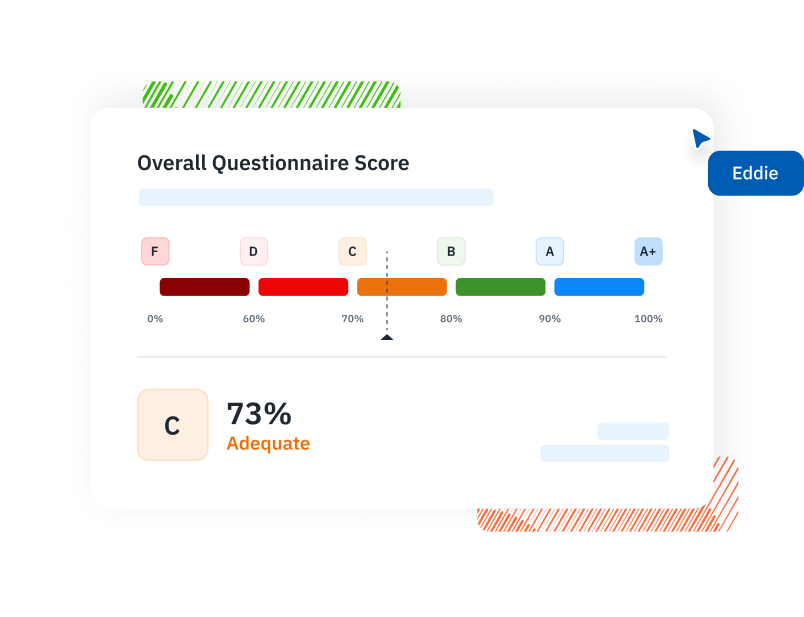
Isora GRC is the GRC Assessment Platform™ built specifically for information security teams. It supports the full risk workflow, from assessments and questionnaires to risks, inventory, and reporting. It includes prebuilt HECVAT questionnaires, and its HECVAT uploader imports completed HECVAT 3 and HECVAT 4 files.
Best for: Security teams that need to operationalize IT and third-party risk management across assets, third-party vendors, and business units.
| Isora GRC | |
| Strengths | Built for workflows, not checklists
✅ Supports assessments, inventory tracking, risk registers, and exceptions in a unified experience. Designed for org-wide adoption ✅ WCAG-compliant UX built for respondents outside security, which makes risk everyone’s job. Fast time-to-value ✅ Live in days or weeks, with no-code setup and minimal lift from IT. Flexible by default ✅ Customizable assessments, scalable categories, and framework-aligned questionnaires without heavy configuration. Scales across teams and vendors ✅ Assesses internal teams and third-party vendors from one place. |
| Limitations | ⚠️ Not designed for legal, audit, or finance teams seeking one platform for enterprise-wide GRC
⚠️ May be too structured for teams looking to build one-off surveys or lightweight audits without repeatable workflows |
ZenGRC vs. Hyperproof
Hyperproof focuses on control management and compliance across many frameworks, and says it offers “160+ pre-built frameworks.” Its Risk Management product lists a risk register, risk assessments and a customizable intake survey that collects risk signals from employees, partners, and vendors. Its vendor risk management capabilities include tailored risk and security questionnaires sent to vendors.
Best for: Compliance teams managing multiple frameworks and tracking evidence across controls.
| Hyperproof | |
| Strengths | ✅ Tracks controls across multiple compliance frameworks
✅ Automates evidence collection through its Hypersyncs data connectors ✅ Hyperproof Gov runs in what Hyperproof calls a FedRAMP Certified Class C (Rev5) environment, as of October 2026 |
| Limitations | ⚠️ HECVAT is not among the frameworks listed on Hyperproof’s frameworks page, as of October 2026 |
| Other Comparisons | Hyperproof vs Drata vs Isora GRC |
ZenGRC vs. Optro
Optro (formerly AuditBoard) describes itself as AI-powered GRC software with audit, risk, infosec and compliance solutions, and says it is trusted by over 50% of the Fortune 500. Its IT & Cyber Risk Management product lists business impact assessments at the asset level, and its Third-Party Risk Management product bundles multiple vendor questionnaires into a single task and generates risk scores from the responses. Optro’s risk solution says it can push risk ownership to the front line.
Best for: Internal audit and SOX teams managing control documentation and audit trails.
| Optro | |
| Strengths | ✅ Great for internal audit processes and control testing
✅ Preloaded library of 30+ frameworks, including SOC 2, ISO 27001, and GDPR |
| Limitations | ⚠️ Optro’s pricing page asks buyers to request pricing and lists no price, as of October 2026
⚠️ HECVAT is not named on the Optro product pages checked, as of October 2026 |
| Other Comparisons | ZenGRC vs AuditBoard vs Isora GRC |
ZenGRC vs. Drata
Drata is a compliance automation platform for security and GRC teams maintaining more than one certification at a time. Controls are defined once and proven continuously by automated tests fed from its integrations, and its help center documents vendor management and a TPRM Agent. Drata acquired SafeBase in 2025, so the trust center is now Drata’s own product line.
Best for: Security and GRC teams maintaining more than one certification at a time, such as SOC 2 and ISO 27001.
| Drata | |
| Strengths | ✅ Continuous control monitoring through automated tests fed from its integrations
✅ Trust center product line from its 2025 SafeBase acquisition |
| Limitations | ⚠️ Drata’s published framework list leaves out HECVAT, GLBA, TX-RAMP and StateRAMP/GovRAMP, as of October 2026 |
| Other Comparisons | Drata vs OneTrust vs Isora GRC |
ZenGRC vs. OneTrust GRC
OneTrust GRC was built privacy-first and extended into GRC, third-party risk, and AI governance. Vendors, assets, entities, and processing activities share one inventory. Its Tech Risk and Compliance page lists IT Risk Management and an evergreen asset inventory, and says OneTrust offers “out-of-the-box support for 55+ frameworks.”
Best for: Large enterprises that want privacy, governance, and third-party risk in one suite.
| OneTrust GRC | |
| Strengths | ✅ Strong privacy and regulatory compliance features
✅ One inventory shared by vendors, assets, entities, and processing activities |
| Limitations | ⚠️ OneTrust’s pricing page says each solution package has one or more usage meters, as of October 2026 |
| Other Comparisons | OneTrust vs ServiceNow GRC vs Isora GRC |
ZenGRC vs. Archer IRM
Archer IRM is a long-established GRC platform with broad features and high configurability, offered on-premises or as SaaS. Operational risk, IT risk, third-party governance, audit, and compliance are each an application the customer configures. Archer says “Pre-built frameworks and templates mean you start configuring, not building from scratch,” and its public sector page says most enterprise deployments go live in 8–12 weeks.
Best for: Large enterprises with formalized GRC programs and dedicated governance teams.
| Archer IRM | |
| Strengths | ✅ Deep compliance functionality with support for complex governance programs
✅ Ships mapped to NIST, ISO 27001, SOC 2, and PCI DSS, with cross-framework control mapping ✅ Archer says you start configuring from pre-built frameworks and templates, as of October 2026 |
| Limitations | ⚠️ Archer’s public sector page says most enterprise deployments go live in 8–12 weeks, as of October 2026
⚠️ Archer says pricing scales with modules, users, and deployment model, as of October 2026 |
| Other Comparisons | ZenGRC vs Archer IRM vs Isora GRC
Archer IRM vs ServiceNow GRC vs Isora GRC |
ZenGRC vs. ServiceNow GRC
ServiceNow GRC runs risk and compliance on the ServiceNow platform. Its risk and compliance records share one data model with the customer’s IT service, asset, and security data, and its Store listings include a Continuous Authorization and Monitoring app to simplify NIST Risk Management Framework implementation.
Best for: Organizations already using ServiceNow for IT operations that want to integrate risk and compliance into existing workflows.
| ServiceNow GRC | |
| Strengths | ✅ Tightly integrated with ServiceNow’s ITSM and business service workflows
✅ Supports structured compliance tracking and reporting |
| Limitations | ⚠️ That shared data model assumes a populated configuration management database (CMDB) |
| Other Comparisons | Archer IRM vs ServiceNow GRC vs Isora GRC
OneTrust vs ServiceNow GRC vs Isora GRC |
What Customers Say About Isora GRC
Security teams use Isora GRC to replace manual processes with intuitive workflows and actionable insight.
SaltyCloud makes Isora GRC, one of the products compared here. The assessments are our own, so confirm current features and pricing with each vendor before you decide.
FAQs
What are some alternatives to ZenGRC?
ZenGRC is a multi-framework GRC platform built around audit management, compliance, and cross-mapped frameworks. Alternatives include Hyperproof, Optro, and Drata among multi-framework and compliance automation tools, and OneTrust, Archer IRM, and ServiceNow GRC among enterprise GRC suites. Isora GRC is a GRC Assessment Platform™ for security teams that run recurring assessments across their own departments, systems, and vendors.
Does ZenGRC support HECVAT?
ZenGRC’s framework content registry says its solutions can support any framework and provide content for over 30 standards and regulations. HECVAT is not among the standards it names, as of October 2026, so higher-ed teams should ask ZenGRC directly how it handles a HECVAT. Isora GRC includes prebuilt HECVAT questionnaires, and its HECVAT uploader imports completed HECVAT 3 and HECVAT 4 files.
What is the difference between ZenGRC and Isora GRC?
ZenGRC organizes a program around audit management, compliance evidence, and cross-mapped frameworks, and it includes AI-powered control assessments at no additional cost. Isora GRC is a GRC Assessment Platform™ built around assessments of departments, applications, and third-party vendors, with inventory, risks, exceptions, and reports attached to the assessment data. Isora GRC ships no AI features, so a team that wants AI-assisted control assessments should look at ZenGRC.
Why do teams switch from ZenGRC to Isora GRC?
Isora GRC fits teams whose security program runs on recurring assessments rather than audit cycles, that need prebuilt HECVAT questionnaires, or that want assessment work to reach owners across the organization. Its WCAG-compliant interface is built for respondents outside security, and Isora tags each question to the controls it addresses across frameworks, with reports that roll up CMMC readiness and SPRS scores.
Is ZenGRC the same as RiskOptics or Reciprocity?
According to ZenGRC’s blog, the company’s story began in 2009 with Reciprocity and its product, ZenGRC. In June 2024 the company announced that “RiskOptics becomes ZenGRC,” taking the product’s name. Older reviews and documentation can refer to the company as Reciprocity or RiskOptics.
What should I look for in a ZenGRC alternative?
Look for a platform that makes the assessment the core unit of work and covers the frameworks you report against, including HECVAT if you serve higher education or assess vendors with it. You’ll also want named customers in your sector, assessment results that roll into risk tracking and reporting, and a clear account of how any in-platform AI is governed. Isora GRC was built for assessment-led security programs.
For a framework to evaluate GRC platforms before a demo, download our GRC Buyer’s Guide for Information Security Teams.

This content is for informational purposes only and does not constitute legal or compliance advice. See our full disclaimer.
