




Every security team needs a thorough, scalable way to manage IT risk—not just rely on external vendor ratings.
Platforms like RiskRecon and SecurityScorecard focus on vendor intelligence, providing external scores to identify risks within your supply chain and third-party vendors.
External scores can highlight issues, and RiskRecon and SecurityScorecard both also list workflows to track and resolve them, so compare how far each one goes.
Isora GRC leads with a smarter method. It’s purpose-built for security teams who need to run assessments, manage inventories, and track risks—moving beyond vendor scores to offer a comprehensive and actionable risk management solution.
Let’s delve into this.
Choosing the Right Platform for IT Risk Management
RiskRecon and SecurityScorecard help organizations monitor external vendor risk, and both also list workflows to manage that risk. These platforms produce automated security ratings based on digital footprint analysis, and both add vendor questionnaires alongside those ratings.
RiskRecon lists vendor action plans with progress tracking, and SecurityScorecard lists Action Plans with owners and remediation tracking in TITAN Secure.
Isora GRC is designed for security teams that want to go beyond surface-level scoring. It enables teams to manage vendor assessments with customizable questionnaires, maintain detailed vendor inventories, log exceptions and issues, and document real-time risk decisions.
Isora provides the visibility, actionability, and documentation security teams need to satisfy both operational and compliance requirements.
The Workflow That Matters: Managing IT Risks and Compliance
Third-party risk management isn’t just about identifying risk—it’s about doing something with that information. RiskRecon and SecurityScorecard both pair scores with vendor workflows. RiskRecon sells questionnaire-based assessments and tracks vendor action plans, and SecurityScorecard lists questionnaires, documentation requests and Action Plans with owners.
Isora GRC lets teams assess vendors with industry-standard or custom frameworks, capture findings in a risk register, and track issues through resolution. Teams can flag high-risk vendors, apply exception workflows, generate audit-ready reports, and measure control maturity over time. It’s a complete platform for managing vendor risk—not just observing it.
How Each Platform Supports IT Risk Management Workflows
| Workflow Area | RiskRecon | SecurityScorecard | Isora GRC |
| Assessment Management | RiskRecon focuses more on external assessments than internal ones. It also sells questionnaire-based RiskRecon Assessments, powered by Whistic, and lists a use case for monitoring your own enterprise and subsidiaries. | SecurityScorecard focuses on rating and checking outside companies for security risks. It says the platform also assesses your own systems with the same rigor used for vendors. Its help center documents sending questionnaires to different teams in your organization. | Centralized, intuitive assessment dashboard across business units, vendors, and assets. Built specifically for security teams. |
| Questionnaire Delivery & Completion | RiskRecon pairs external scanning with questionnaire-based RiskRecon Assessments, powered by Whistic. Its site says the AI-powered questionnaire functionality accelerates third-party risk assessments. | SecurityScorecard runs automatic checks on third-party risks. Its pricing page lists templated questionnaire management, with custom questionnaires on the Premium and Elite plans. | Customizable and prebuilt questionnaires for frameworks like NIST, ISO, GLBA, HIPAA, and more. Designed for internal and external collaboration. |
| Inventory Tracking | External asset inventories update automatically from scans, which saves time. Its site also lists vendor portfolio management and an IT profile of the assets in your owned ecosystem. | SecurityScorecard works mostly on security ratings for outside vendors. Its pricing page lists a vendor system of record, and free accounts include digital footprint management for your own domain. | Centralized tracking of assets, vendors, and organizational units with integration support for existing data sources. |
| Risk Register & Exception Management | RiskRecon provides risk findings linked to vendors and assets. It prioritizes every finding by issue severity and asset value. An exception workflow or risk register is not stated on RiskRecon’s product and use-case pages as of September 2026. | SecurityScorecard gives insight into third-party risks, and its help center lists a Risk Register report widget for your organization. It also documents an Accept Risk action that formally accepts a vendor finding without requiring remediation. | Flexible, collaborative risk register with scoring, status, evidence, and ownership tied directly to assessments. Exception management is built-in and intuitive—no extra modules or configuration required. |
| Scoring, Reporting & Risk Visualization | Security ratings and risk reports are detailed and visual. Its site lists board-level reporting and promotes Mastercard’s Cyber Quant for cyber risk quantification. | SecurityScorecard does well with external security ratings and reports. Its help center also lists report widgets for your own organization, such as a NIST Cybersecurity Framework maturity score. | Automated scorecards, risk maps, and executive-friendly reports with actionable insights—no manual config required. |
| Collaboration & User Experience | The dashboard is clean and easy to navigate. Its collaboration workflow shares action plans with vendors and tracks each vendor’s progress on them. | The design is clean and works well for security teams checking outside risks. Its Action Plans assign owners to issues and track progress in real time. Its TITAN Secure product adds an Exchange Hub to request remediation or documentation from third parties. | WCAG-compliant, award-nominated interface with built-in commenting, team workflows, and fast onboarding. |
| Implementation & Setup | Implementation is fast, especially for external monitoring. Its site offers free ratings for up to 50 vendors, and the trial includes a RiskRecon report of your own organization. | Setup is simple for companies focused on vendor risks. Its pricing page lists basic and advanced integrations and APIs for custom integrations, and its help center documents automated Jira tickets for findings. | No-code setup in days or weeks. Minimal IT lift required. Designed to go live quickly across teams and vendors. |
What Sets Isora GRC Apart?
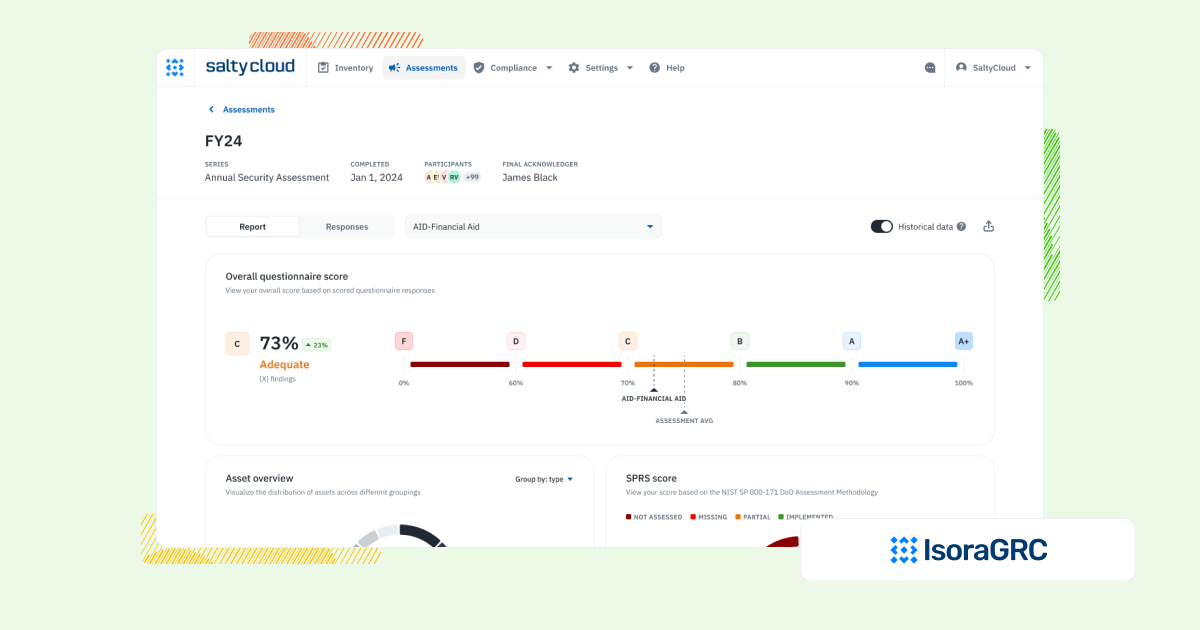
Isora GRC was purpose-built for information security teams—designed to support the real workflows behind risk and compliance, not just generate reports. While legacy GRC platforms require months of configuration and rigid processes, Isora takes a modern, scalable approach:
- Purpose-built for security and third-party risk teams
- No extra modules or cross-department bloat—just the workflows that matter.
- Easy for anyone to use
- Clean UI, no complex training, and built to drive adoption across the org.
- Streamlined for action, not just documentation
- Assessments, questionnaires, inventories, risk tracking, and reporting—all in one place.
- Fast, no-code implementation
- Go live in weeks, not quarters, with minimal IT lift.
- Scales with your program
- Whether you’re running a lean risk function or supporting a large institution, Isora grows with you—without getting in the way.
Who Each Platform Is Best For
| Platform | Who It’s For |
| RiskRecon | Fast external risk scores, with questionnaire-based assessments and vendor action plans for follow-up. |
| SecurityScorecard | Seeing how vendors stack up at a glance. Its site also lists templated questionnaires, Action Plans and self-monitoring of your own external posture. |
| Isora GRC | Security teams that need a scalable, usable IT risk management program across their organization. |
What Our Customers Say About Isora GRC
Security teams at top institutions are using Isora GRC to replace legacy tools and manual processes with intuitive workflows and actionable insight.
SaltyCloud makes Isora GRC, one of the products compared here. The assessments are our own, so confirm current features and pricing with each vendor before you decide.
FAQs
What’s the difference between RiskRecon, SecurityScorecard, and Isora GRC?
RiskRecon and SecurityScorecard offer external risk ratings by scanning vendors’ public-facing digital assets, and both also sell vendor questionnaires. Isora GRC supports structured, internal third-party risk workflows—such as sending questionnaires, managing inventories, resolving exceptions, and maintaining a centralized risk register.
Are RiskRecon and SecurityScorecard considered vendor risk management platforms?
Both sell third-party risk products built on their ratings. RiskRecon says its Assessments automate the end-to-end TPRM lifecycle, and SecurityScorecard describes an AI-powered platform for third-party risk management. Both track vendor remediation, and SecurityScorecard’s Exchange Hub requests documentation in-platform.
Does Isora GRC replace tools like RiskRecon or SecurityScorecard?
Yes, for teams that want to actively manage risk. Isora GRC allows teams to assess vendors using standardized frameworks (e.g., HECVAT, SIG), collect evidence, assign tasks, and track exceptions in a centralized system.
Which platform is better for managing third-party risk across the organization?
Isora GRC is built specifically for that. It supports the full vendor risk lifecycle—covering assessment delivery, inventory tracking, issue resolution, and real-time collaboration.
Can Isora GRC be used alongside RiskRecon or SecurityScorecard?
Yes. Many organizations use these tools for initial risk signals or monitoring and use Isora GRC to run assessments, collect supporting evidence, and manage vendor engagement over time.
What should I look for in a platform to manage vendor risk effectively?
Look for internal workflow support—like customizable questionnaires, vendor inventories, exception tracking, and collaboration features. Isora GRC is designed for security teams who need to manage third-party risk proactively and continuously.
For a framework to evaluate GRC platforms before a demo, download our GRC Buyer’s Guide for Information Security Teams.

This content is for informational purposes only and does not constitute legal or compliance advice. See our full disclaimer.
