




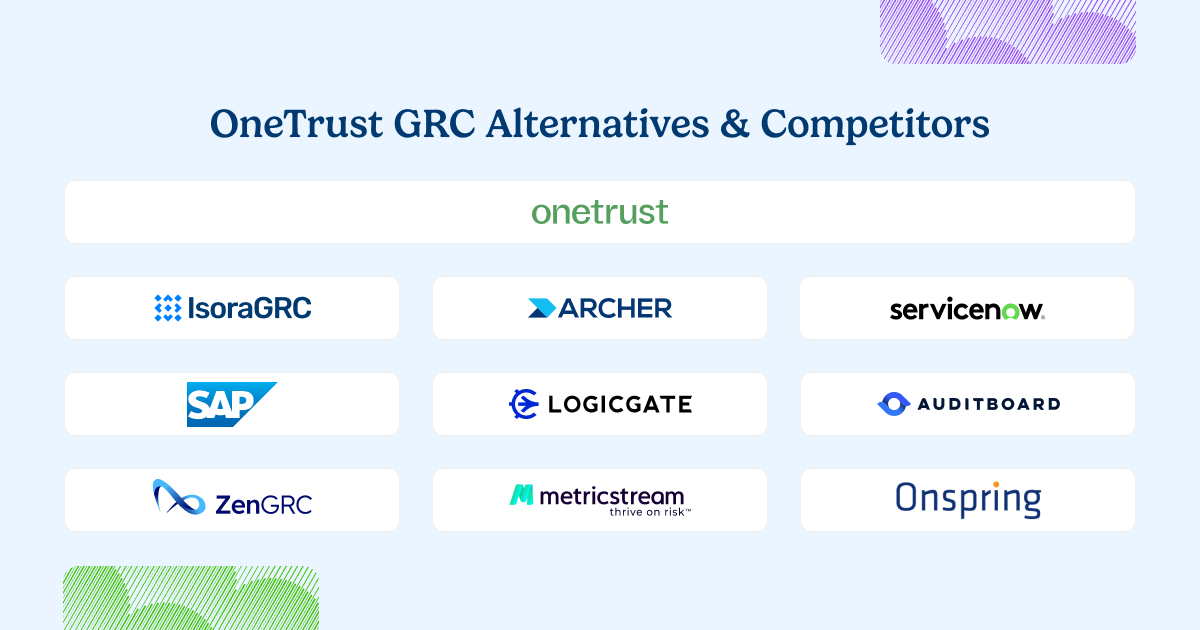
OneTrust is best known for its privacy, compliance, and data governance tools. Its GRC platform extends into risk and third-party management, but it’s still largely rooted in regulatory workflows.
For security teams, that can mean working inside a platform built for many other functions first, including privacy, consent, AI governance and compliance. When your job is to assess risk, manage vendors, and track exceptions across your organization, a suite that broad can feel out of step.
OneTrust belongs to a category of all-in-one GRC platforms: broad tools where information security risk is one workflow among privacy, AI governance, compliance and third-party management.
Why Teams Look for OneTrust GRC Alternatives
| Common Limitation | Why It’s a Problem | What to Look for Instead |
| Built as a broad suite spanning privacy, AI governance, compliance, tech risk and third-party management | Security risk is one workflow among many. OneTrust lists IT risk assessments that engage the business and collect information, as of September 2026 | Purpose-built for information security risk |
| Assessments are built around compliance frameworks and third parties | Its site lists framework and third-party assessments with issue tracking. OneTrust’s privacy operations checklist also says to send simple questionnaires to teams, as of September 2026 | Built-in workflows for assessments and exceptions |
| Configuration across a multi-solution suite | Workflows and frameworks are configured within a platform that also runs privacy, consent and AI governance programs | Intuitive experience with fast deployment |
| Weak internal adoption | Collaboration on its site is described for remediation, policy attestation and third-party follow-up. Its IT Risk Management page also lists assessments that engage the business, as of September 2026 | Platform that works across technical and business units |
What to Look for in a OneTrust GRC Alternative
- Support for internal and vendor risk assessments
- Centralized IT asset and vendor inventories
- Exception management and risk registers that stay up to date
- Collaboration features to drive organization-wide adoption
- A platform designed for security teams—not just compliance officers
Top OneTrust GRC Alternatives
1. Isora GRC
| Category | Details |
| Best For | Security teams that need to operationalize IT and third-party risk management across assets, third-party vendors, and business units. |
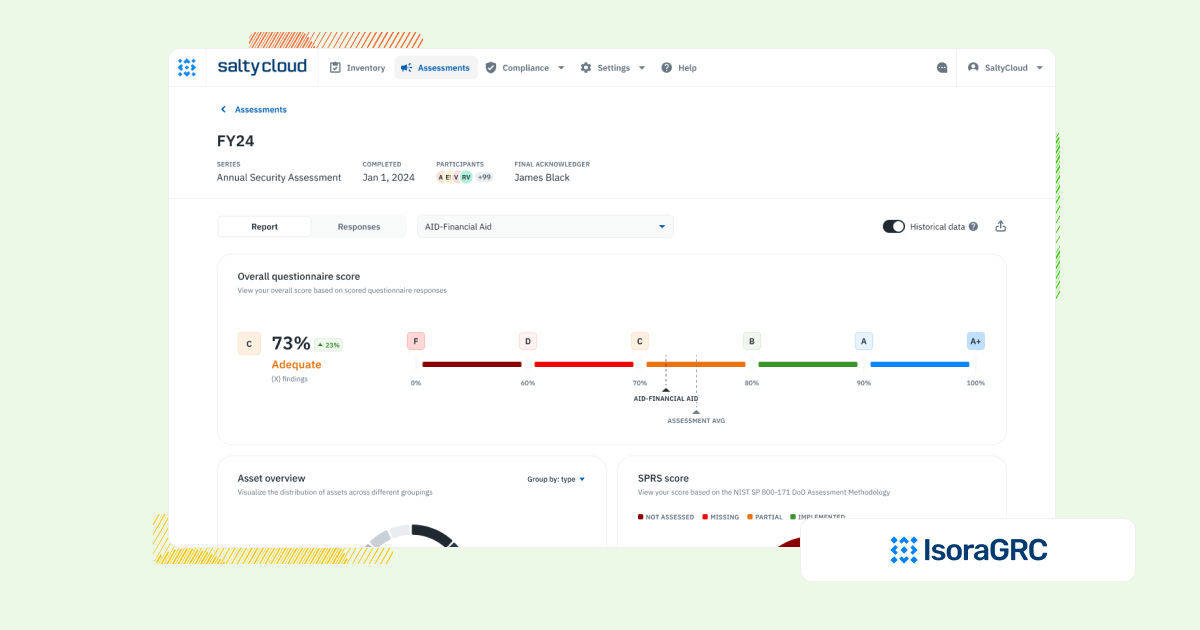
| Overview | Isora GRC is the GRC Assessment Platform™ built specifically for information security teams. It supports the full risk workflow, from assessments and questionnaires to risks, inventory, and reporting, without the complexity of legacy GRC tools or the limitations of audit-first platforms. |
| Strengths | Built for workflows, not checklists
✅ Supports assessments, inventory tracking, risk registers, and exceptions in a unified experience. Designed for org-wide adoption ✅ WCAG-compliant UX that requires no training and makes risk everyone’s job. Fast time-to-value ✅ Live in days or weeks, with no-code setup and minimal lift from IT. Flexible by default ✅ Customizable assessments, scalable categories, and framework mapping without heavy configuration. Scales across teams and vendors ✅ Works equally well for internal teams and third-party risk management programs. |
| Limitations | ⚠️ Not designed for legal, audit, or finance teams seeking one platform for enterprise-wide GRC
⚠️ May be too structured for teams looking to build one-off surveys or lightweight audits without repeatable workflows |
| When to Consider | If you need a modern risk platform built for continuous use, with workflows your security team will actually adopt, without the rigidity and privacy-first limitations of compliance-focused GRC platforms. |
2. Archer IRM
| Category | Details |
| Best For | Large organizations that need enterprise-wide governance across risk, compliance, audit and third-party programs. |
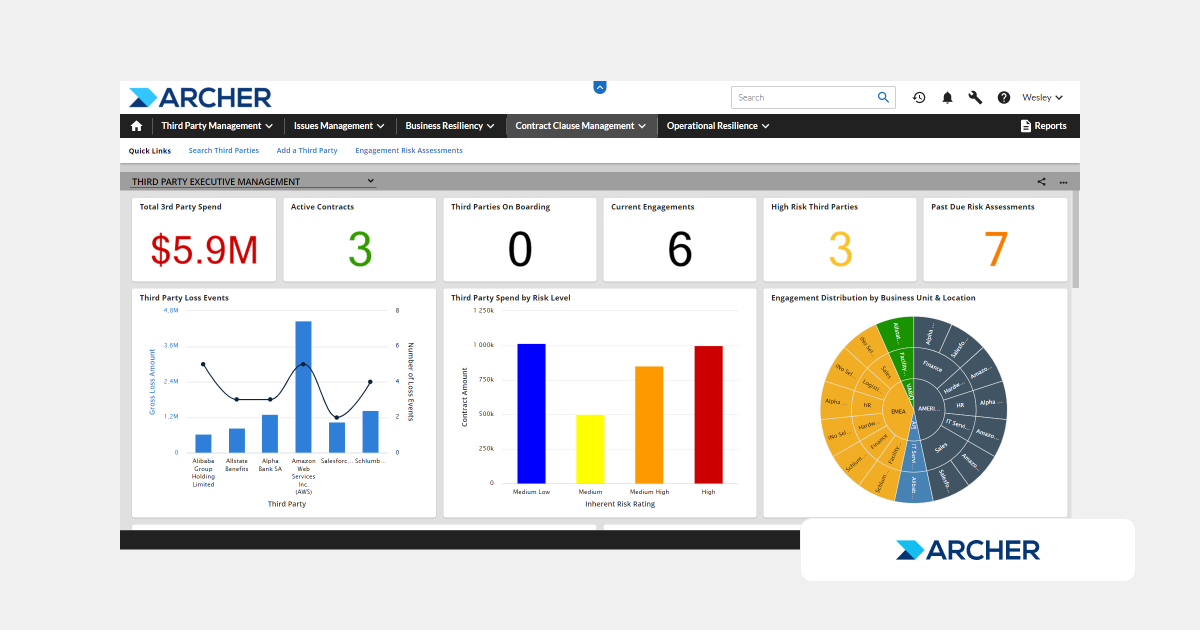
| Overview | Archer IRM is an enterprise GRC platform designed for broad, cross-departmental risk and compliance management. It is highly customizable; its site says scope drives the implementation timeline and that most programs start with one IT and security risk use case. |
| Strengths | ✅ Supports deep governance and compliance programs
✅ Highly configurable for large, centralized risk programs |
| Limitations | ⚠️ Implementation is scoped and phased; Archer’s site says scope drives the timeline and most programs start with one use case
⚠️ Exception tracking is not stated on Archer’s IT & Security Risk Management page as of September 2026 |
| When to Consider | If you need a highly customizable, enterprise-wide GRC platform and want IT risk assessments, an IT risk register and findings tracking on the same records as enterprise risk and audit. Exception tracking is not stated on Archer’s IT & Security Risk Management page as of September 2026. |
| Other Comparisons | Archer IRM vs ServiceNow GRC vs Isora GRC
LogicGate vs Archer IRM vs Isora GRC ZenGRC vs Archer IRM vs Isora GRC |
3. ServiceNow GRC
| Category | Details |
| Best For | Organizations already using ServiceNow for IT operations that want to integrate risk and compliance into existing workflows. |
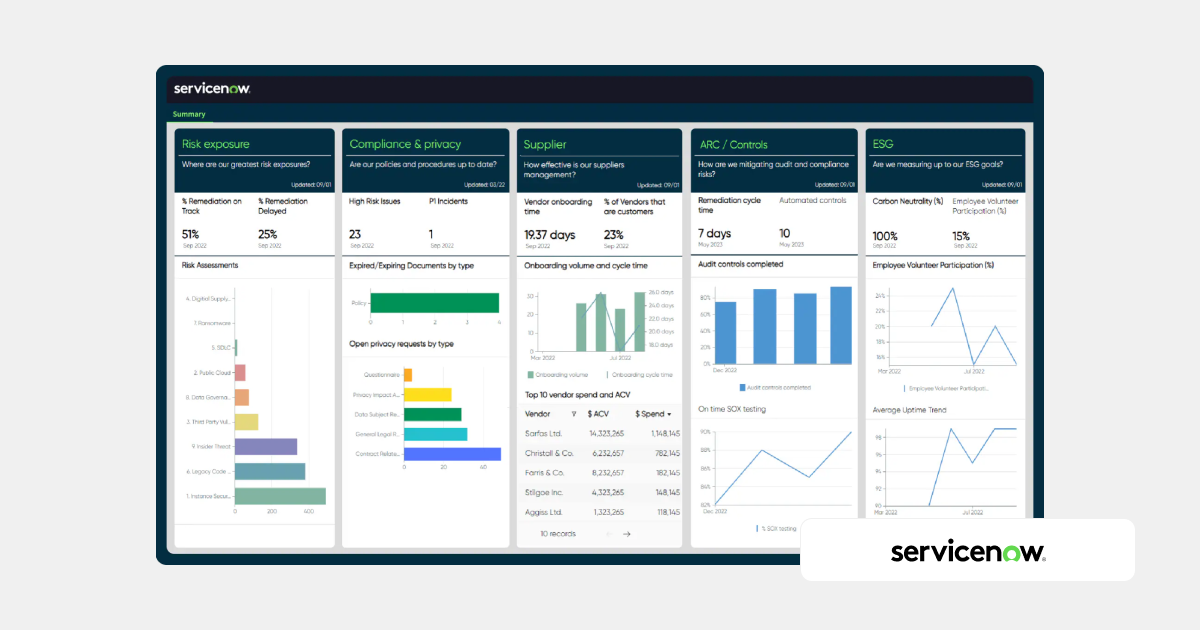
| Overview | ServiceNow GRC adds risk and compliance tools on top of the core ServiceNow platform. While it works well for tying GRC to IT services, it’s not built for agile IT risk management or cross-team vendor assessments, especially outside of the ServiceNow ecosystem. |
| Strengths | ✅ Tightly integrated with ServiceNow’s ITSM and business service workflows
✅ Supports structured compliance tracking and reporting |
| Limitations | ⚠️ Difficult to configure without technical help or outside consultants
⚠️ Not ideal for teams looking for flexible, repeatable risk assessment workflows |
| When to Consider | If your risk team is already embedded in the ServiceNow ecosystem but can work around the limited agility and slower rollout for purpose-built IT risk and third-party management tasks. |
| Other Comparisons | Archer IRM vs ServiceNow GRC vs Isora GRC
OneTrust vs ServiceNow GRC vs Isora GRC |
4. SAP GRC
| Category | Details |
| Best For | Enterprises heavily invested in SAP products that need compliance and controls embedded in business systems. |
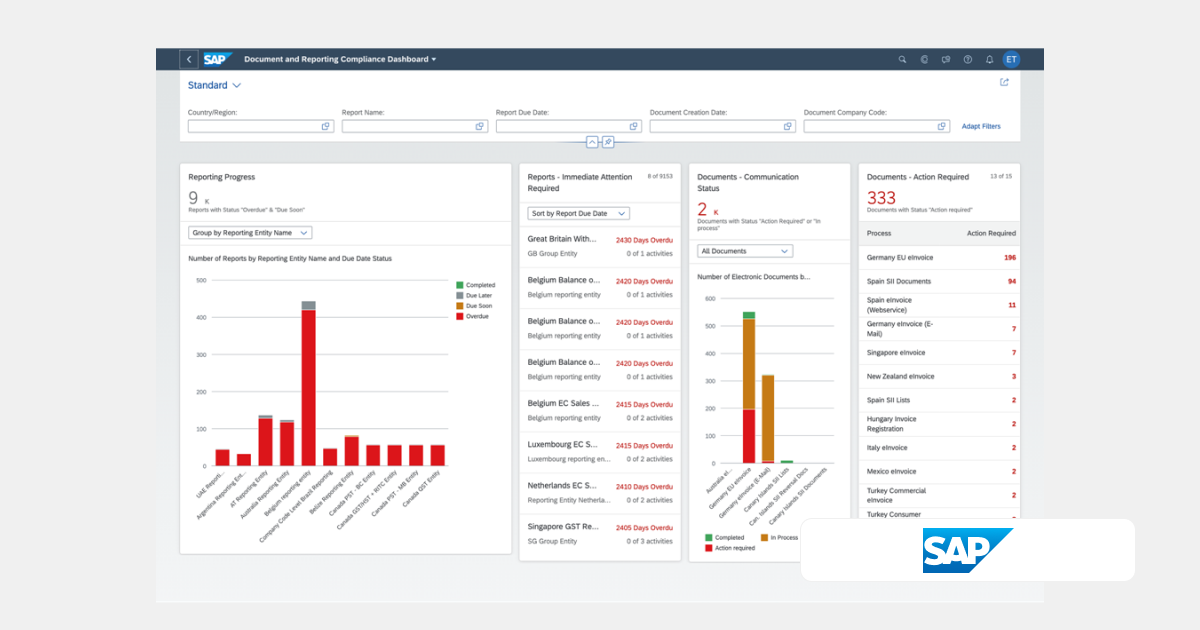
| Overview | SAP GRC is tightly integrated with SAP’s financial and operational systems, offering governance and compliance tools tailored to that ecosystem. But for security teams needing modern, collaborative workflows, SAP GRC often feels outdated and inflexible. |
| Strengths | ✅ Strong for enforcing policies and controls across SAP environments
✅ Designed to meet regulatory and audit standards in large organizations |
| Limitations | ⚠️ Rigid structure and outdated interface make it hard to adapt for security workflows
⚠️ Poor fit for flexible risk assessments, vendor reviews, or exception tracking |
| When to Consider | If you’re already running SAP across your organization but can work around the lack of usability and flexibility for IT and third-party risk management needs. |
| Other Comparisons | MetricStream vs SAP GRC vs Isora GRC |
5. LogicGate
| Category | Details |
| Best For | Teams that want to build and control their own risk processes in a visual, no-code environment. |
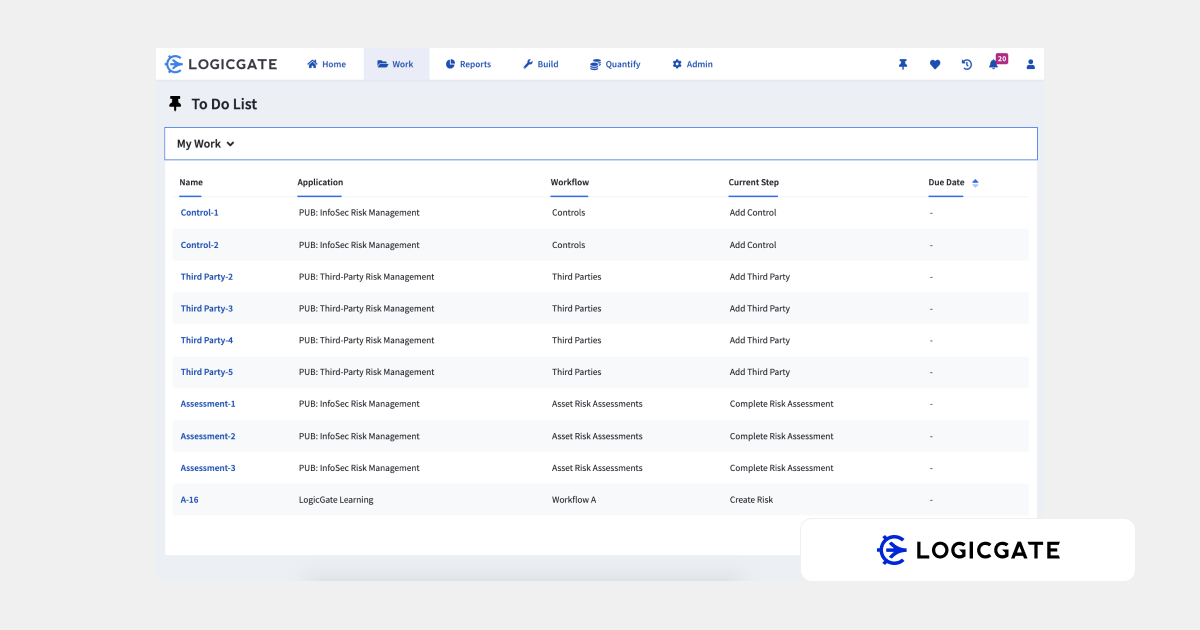
| Overview | LogicGate offers flexible, no-code workflow building for risk and compliance teams. Its site lists ready-made applications, including cyber risk management, third-party risk management, asset management and exceptions management, each configured in a no-code builder. |
| Strengths | ✅ Flexible visual builder for creating custom workflows and dashboards
✅ Supports use cases across risk, compliance, and third-party management |
| Limitations | ⚠️ Setup and workflow design require time and technical ownership
⚠️ Cyber risk, third-party risk, asset and exception workflows ship as separate applications on the Risk Cloud platform |
| When to Consider | If you want full control over risk process design and want a no-code platform where applications for vendor and IT risk workflows are configured and extended by your own team. |
| Other Comparisons | LogicGate vs Archer IRM vs Isora GRC |
6. AuditBoard
| Category | Details |
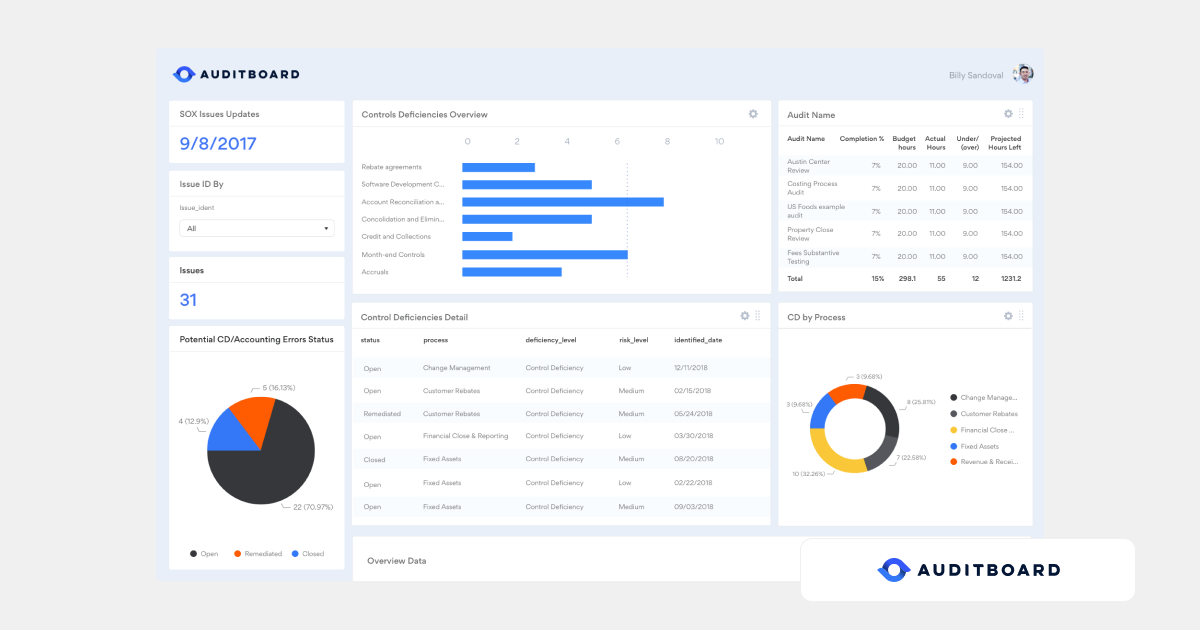
| Best For | Internal audit and compliance teams that need structured tools to manage controls, evidence, and audit readiness. |
| Overview | Optro (formerly AuditBoard) makes it easy to document controls, collect evidence, and manage compliance tasks. Its site also lists a Cyber Risk Management product and a third-party risk management product with automated vendor assessments and remediation tasks. Optro’s IT risk and compliance page lists exceptions management for managing and remediating policy exceptions, as of September 2026. |
| Strengths | ✅ Great for tracking controls and managing audit documentation
✅ Simple, guided workflows for compliance teams and auditors |
| Limitations | ⚠️ Vendor reviews and cyber risk management are separate products from the audit and controls modules
⚠️ A broad platform spanning audit, compliance, risk, infosec and AI governance, so a security team adopts more than its own workflows |
| When to Consider | If your work is audit-heavy and focused on control documentation and you want third-party risk and cyber risk management inside the same platform as your audit program. |
| Other Comparisons | AuditBoard vs ServiceNow GRC vs Isora GRC |
7. ZenGRC
| Category | Details |
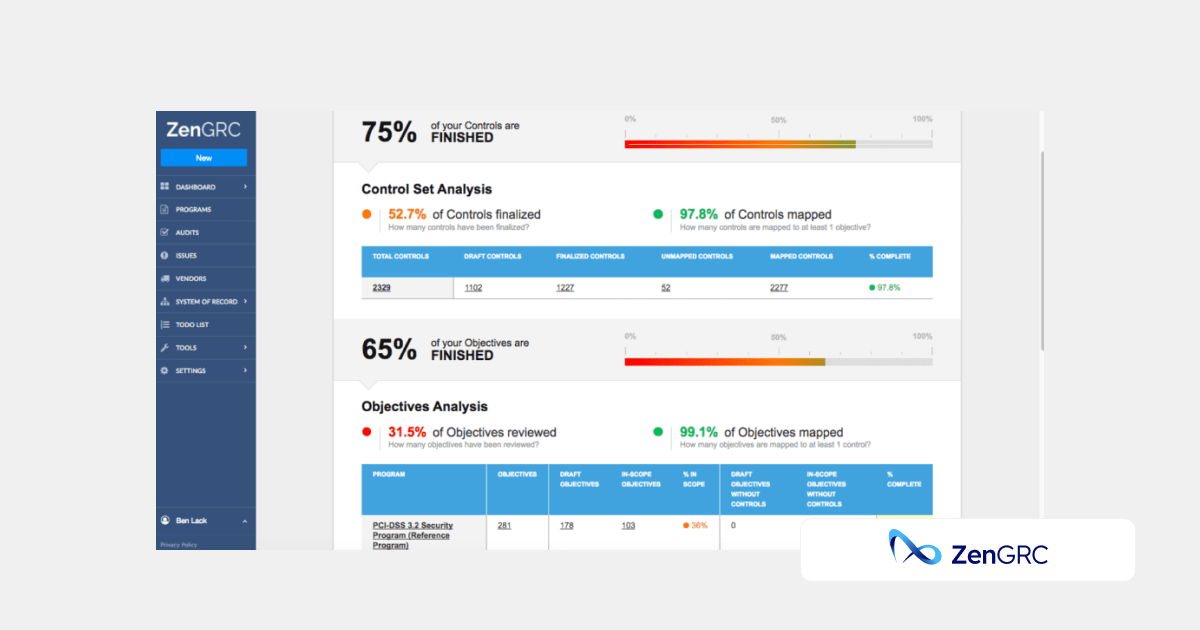
| Best For | Smaller teams looking to organize compliance documentation and track audit progress with minimal overhead. |
| Overview | ZenGRC is a GRC platform designed to help teams stay on top of compliance obligations like SOC 2, ISO, or NIST. Its site also lists risk management with real-time monitoring and vendor management with questionnaires, continuous monitoring and a vendor portal. |
| Strengths | ✅ Easy to use and fast to set up for basic compliance tracking
✅ Useful for organizing audit evidence and framework mappings |
| Limitations | ⚠️ ZenGRC’s frameworks page lists an inventory of all the systems that control data assets, as of September 2026
⚠️ ZenGRC announced pre-loaded risk registers, and its API documentation lists an Exceptions object, as of September 2026 |
| When to Consider | If you need a lightweight tool for compliance evidence and want risk assessments and vendor questionnaires in the same tool |
| Other Comparisons | ZenGRC vs AuditBoard vs Isora GRC |
8. MetricStream
| Category | Details |
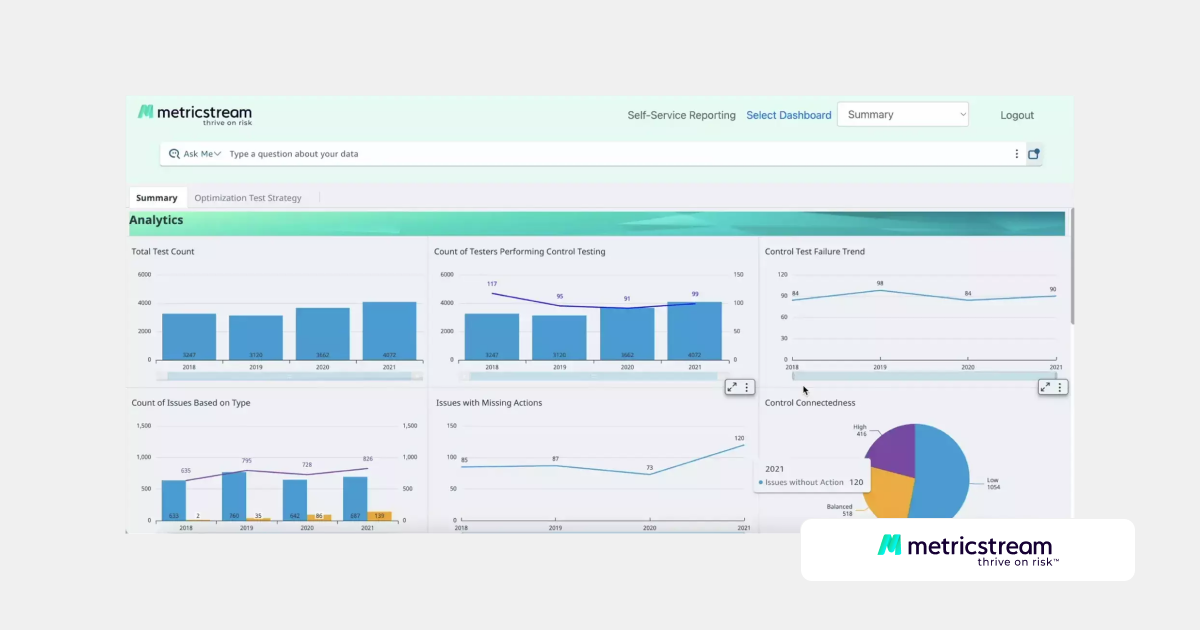
| Best For | Large enterprises needing a centralized GRC system to manage complex, cross-departmental risk and compliance programs. |
| Overview | MetricStream is a heavyweight GRC platform built to manage risk, audit, and compliance across large organizations. Its site lists IT and cyber risk assessments, vulnerability-based remediation for security teams and third-party assessments among its enterprise modules. |
| Strengths | ✅ Supports complex compliance programs and regulatory frameworks like NIST 800-53
✅ Centralized governance tools with deep reporting capabilities |
| Limitations | ⚠️ An enterprise platform where IT and cyber risk is one module among audit, compliance, enterprise risk and third-party programs
⚠️ MetricStream says its Survey Management software manages surveys across business units and locations, as of September 2026 |
| When to Consider | If you manage a large-scale governance program and want IT and cyber risk, third-party risk, audit and compliance in one enterprise platform. |
| Other Comparisons | MetricStream vs SAP GRC vs Isora GRC |
9. Onspring
| Category | Details |
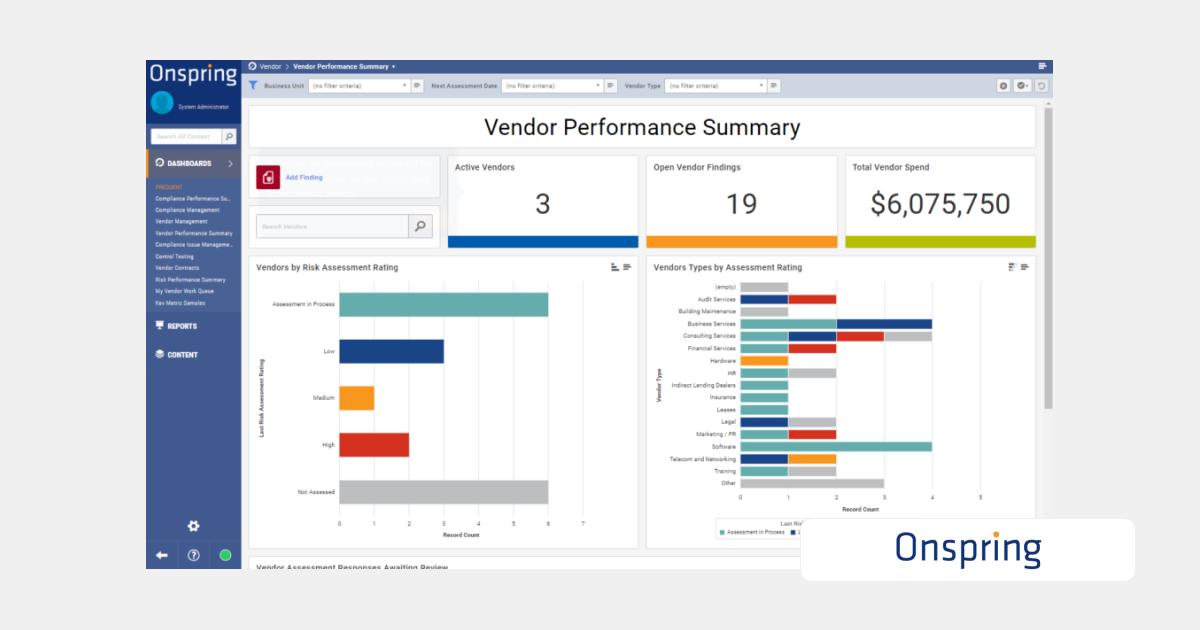
| Best For | Process-heavy departments like legal or audit that want to build custom GRC workflows without code. |
| Overview | Onspring is a no-code GRC platform that allows users to design their own workflows for risk, compliance, and audits. While flexible, it is a general-purpose no-code platform with GRC as one product family. Onspring’s site says most customers choose to have Onspring run the implementation. |
| Strengths | ✅ No-code customization across audit, risk, and compliance use cases
✅ Good for teams with unique process needs and in-house ownership |
| Limitations | ⚠️ A general-purpose business process platform, so GRC workflows sit alongside non-GRC applications
⚠️ Overly broad for focused IT or third-party risk management without significant configuration |
| When to Consider | If you need to design your own governance processes from the ground up and want third-party risk management as a product on the same no-code platform, with vendor surveys and in-app communication built in. |
| Other Comparisons | Onspring vs AuditBoard vs Isora GRC |
What Our Customers Say About Isora GRC
Security teams at top institutions are using Isora GRC to replace legacy tools and manual processes with intuitive workflows and actionable insight.
SaltyCloud makes Isora GRC, one of the products compared here. The assessments are our own, so confirm current features and pricing with each vendor before you decide.
FAQs
What are some alternatives to OneTrust GRC?
OneTrust GRC is part of a category of all-in-one compliance and privacy platforms, and it’s strong in policy and privacy workflows. Still, teams often look to alternatives like Isora GRC when they need structured tools for security risk management, including assessments, inventories, and exception tracking.
Why do teams switch from OneTrust GRC to platforms like Isora GRC?
Many teams move away from OneTrust after finding it difficult to manage real-world security workflows. Its strengths in privacy and documentation don’t always translate to day-to-day risk operations. Isora GRC provides a focused, easy-to-use platform that supports the work security teams actually do—without the overhead.
Does Isora GRC replace tools like OneTrust, or complement them?
In most cases, Isora GRC replaces OneTrust GRC when teams need to operationalize risk management beyond policy and documentation. Isora provides workflows for assessments, exception tracking, vendor inventories, and risk registers—making it a more complete solution for security teams.
Which platform is better for managing vendor and IT risk?
OneTrust is strong in privacy compliance and data governance, and its site also lists third-party risk assessments, IT risk management and issue remediation workflows. OneTrust’s IT Risk Management page also lists assessments that engage the business and collect information, as of September 2026. Isora GRC is purpose-built to handle these workflows—helping teams manage vendor and IT risk collaboratively and continuously.
What should I look for in a OneTrust GRC alternative?
Choose a platform that supports repeatable assessment workflows, centralized risk and exception tracking, and fast deployment. Look for usability beyond GRC teams—so you can engage stakeholders across your organization. Isora GRC checks all of these boxes.
For a framework to evaluate GRC platforms before a demo, download our GRC Buyer’s Guide for Information Security Teams.

This content is for informational purposes only and does not constitute legal or compliance advice. See our full disclaimer.
