




Every security team needs a structured, scalable way to manage IT risk—not just watch third-party ratings.
Platforms like Bitsight and UpGuard specialize in vendor intelligence, offering external scores to flag potential risks across supply chains and partners.
External scores on their own can highlight issues, but they don’t help you assess, track, or resolve them through deeper, ongoing workflows.
Isora GRC focuses on what truly matters. It’s purpose-built for security teams who need to run real assessments, manage inventories, and track risks—moving beyond surface-level scores to full risk management.
Let’s review this closely.
Choosing the Right Platform for IT Risk Management
Bitsight and UpGuard offer continuous external monitoring of vendor security posture. While this can be a useful signal, it doesn’t replace structured assessment workflows. Both also list vendor questionnaires, document collection and remediation tracking. UpGuard tracks exceptions and waivers with owners, and Bitsight lets teams assign findings and mark them Risk Accepted.
Isora GRC enables vendor assessments based on your requirements, organizes responses, highlights exceptions, and feeds results directly into a risk register. It also integrates with your asset and vendor inventory, giving you complete visibility into how third parties map to business-critical systems.
The Workflow That Matters: Managing IT Risks and Compliance
Real vendor risk management happens through engagement—not just observation. Scanning tools like Bitsight and UpGuard alert you to potential issues, and both also list vendor assessments that review documents against frameworks. Bitsight’s help center documents private comments on findings for internal discussion, and UpGuard lists team actions in one platform.
Isora GRC helps you operationalize the process. It supports repeatable assessment cycles, centralized communication, versioning across quarters, and full visibility into vendor relationships. With built-in reporting and accountability workflows, it turns third-party risk into a continuous, trackable practice—not a spreadsheet exercise.
How Each Platform Supports IT Risk Management Workflows
| Workflow Area | Bitsight | UpGuard | Isora GRC |
| Assessment Management | Bitsight tracks security ratings and third-party risks. Its Vendor Risk Management product automates vendor assessments mapped to frameworks such as SIG Lite, NIST CSF 2.0 and HECVAT. Its Framework Intelligence also evaluates internal controls from uploaded documents. | UpGuard offers strong tools for assessments, security ratings, and leak detection. | Centralized, intuitive assessment dashboard across business units, vendors, and assets. Built specifically for security teams. |
| Questionnaire Delivery & Completion | Bitsight’s Vendor Risk Management product sends tiered questionnaire sets such as SIG, NIST CSF, ISO 27001 and CAIQ, with automatic reassessment reminders. It also validates responses against its ratings data. | The system handles questionnaires well. Its site lists prebuilt questionnaires for common frameworks and a builder for custom ones. | Customizable and prebuilt questionnaires for frameworks like NIST, ISO, GLBA, HIPAA, and more. Designed for internal and external collaboration. |
| Inventory Tracking | Bitsight builds a third-party inventory and discovers internet-facing assets by scanning. Its Ratings Tree gives a hierarchical view of the organization’s subsidiaries and business units. An inventory of internal assets is not stated on Bitsight’s product pages or help center as of September 2026. | UpGuard checks vendors and their security levels. Its User Risk product inventories the AI tools and SaaS apps used across your organization. | Centralized tracking of assets, vendors, and organizational units with integration support for existing data sources. |
| Risk Register & Exception Management | Bitsight scores vendor risk with Impact, Trust and Risk Scores and tracks vendor remediation progress. Its issue tracking also lets a team mark its own findings Risk Accepted. A risk register is not stated on Bitsight’s product pages or help center as of September 2026. | UpGuard lists remediation, waiver and exception tracking with owners, due dates and evidence tied to vendor findings. Its Breach Risk product also keeps a risk profile of your own infrastructure, with risk waivers. | Flexible, collaborative risk register with scoring, status, evidence, and ownership tied directly to assessments. Exception management is built-in and intuitive—no extra modules or configuration required. |
| Scoring, Reporting & Risk Visualization | Security ratings come with insights and board-level reporting. | UpGuard includes security scores and reports. Its site lists live dashboards, a reports library and board-ready summaries. | Automated scorecards, risk maps, and executive-friendly reports with actionable insights—no manual config required. |
| Collaboration & User Experience | The interface suits security pros. Bitsight’s help center documents private finding comments and @mentions of colleagues for internal discussion, as of September 2026. | The platform works well for tech users. Its site lists consolidated vendor communications and team actions in one platform. | WCAG-compliant, award-nominated interface with built-in commenting, team workflows, and fast onboarding. |
| Implementation & Setup | Setup feels simple for security-focused teams. Bitsight lists integrations with GRC platforms such as ServiceNow, Archer, OneTrust, ProcessUnity and Aravo. | UpGuard offers a free trial. Its site also lists a Premium Assurance tier with a dedicated consultant and priority support. | No-code setup in days or weeks. Minimal IT lift required. Designed to go live quickly across teams and vendors. |
What Sets Isora GRC Apart?
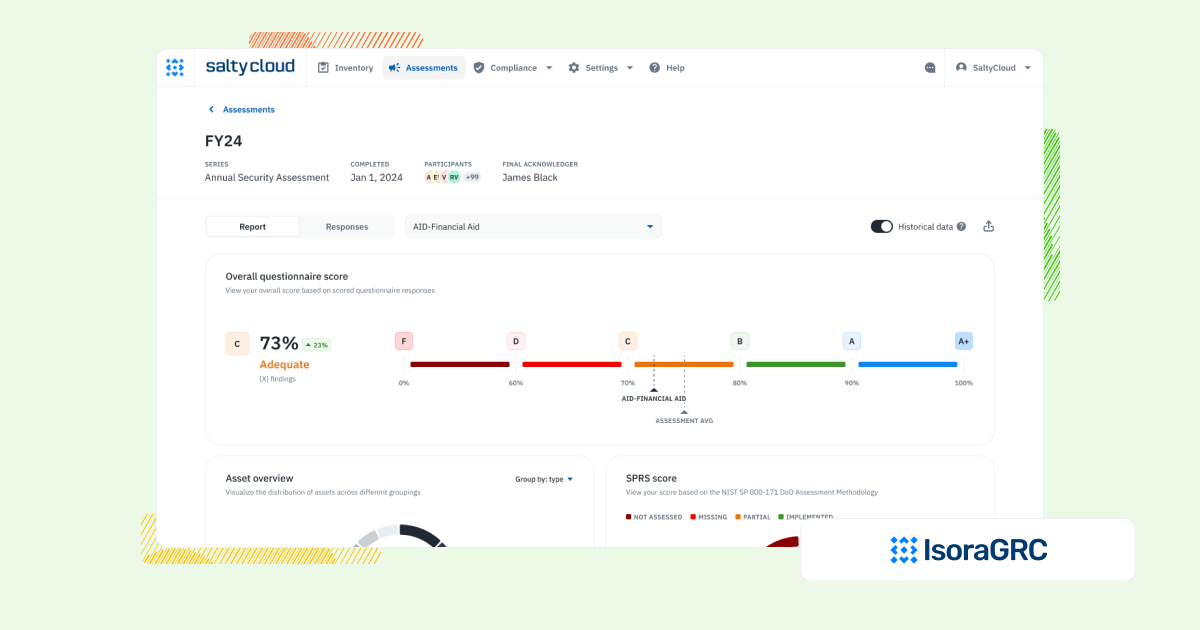
Isora GRC was purpose-built for information security teams—designed to support the real workflows behind risk and compliance, not just generate reports. While legacy GRC platforms require months of configuration and rigid processes, Isora takes a modern, scalable approach:
- Purpose-built for security and third-party risk teams
- No extra modules or cross-department bloat—just the workflows that matter.
- Easy for anyone to use
- Clean UI, no complex training, and built to drive adoption across the org.
- Streamlined for action, not just documentation
- Assessments, questionnaires, inventories, risk tracking, and reporting—all in one place.
- Fast, no-code implementation
- Go live in weeks, not quarters, with minimal IT lift.
- Scales with your program
- Whether you’re running a lean risk function or supporting a large institution, Isora grows with you—without getting in the way.
Who Each Platform Is Best For
| Platform | Who It’s For |
| Bitsight | Companies tracking security ratings for vendors, with vendor assessment workflows in Bitsight’s Vendor Risk Management product. |
| UpGuard | Third-party cyber risk programs that want vendor ratings alongside questionnaire, remediation and exception workflows, plus monitoring of their own attack surface. |
| Isora GRC | Security teams that need a scalable, usable IT risk management program across their organization. |
What Our Customers Say About Isora GRC
Security teams at top institutions are using Isora GRC to replace legacy tools and manual processes with intuitive workflows and actionable insight.
SaltyCloud makes Isora GRC, one of the products compared here. The assessments are our own, so confirm current features and pricing with each vendor before you decide.
FAQs
What’s the difference between Bitsight, UpGuard, and Isora GRC?
Bitsight and UpGuard provide external security ratings and breach monitoring based on internet-facing data. Both also list vendor questionnaires and remediation tracking. Isora GRC enables teams to actively manage third-party risk—issuing questionnaires, maintaining vendor inventories, tracking exceptions, and managing remediation efforts.
Are Bitsight and UpGuard considered vendor risk management platforms?
Both vendors present them that way. Bitsight sells a Vendor Risk Management product, and UpGuard calls its Vendor Risk product a holistic TPRM platform. Both list vendor assessments, document collection and remediation tracking.
Does Isora GRC replace platforms like Bitsight or UpGuard?
Yes, for teams looking for actionable vendor risk management. Isora allows organizations to assess vendors using frameworks like HECVAT, track responses, manage inventories, and handle exceptions—all within a collaborative platform.
Which platform is better for managing third-party risk across the organization?
Isora GRC is built for end-to-end third-party risk workflows. Bitsight and UpGuard provide useful insights and vendor assessment workflows, and Isora helps teams operationalize vendor risk—supporting real collaboration, documentation, and continuous improvement.
Can Isora GRC be used alongside Bitsight or UpGuard?
Yes. Some teams use Bitsight or UpGuard for continuous monitoring, while relying on Isora GRC to drive assessment workflows, manage inventory data, and track vendor risk over time.
What should I look for in a vendor risk platform beyond vendor risk ratings?
Look for tools that support structured assessments, vendor engagement, inventory tracking, and exception resolution. Isora GRC delivers these capabilities, enabling teams to manage—not just monitor—third-party risk.
For a framework to evaluate GRC platforms before a demo, download our GRC Buyer’s Guide for Information Security Teams.

This content is for informational purposes only and does not constitute legal or compliance advice. See our full disclaimer.
