

Woot!
We got your request. Hang on tight and we'll get back to you!
 Assessment Management
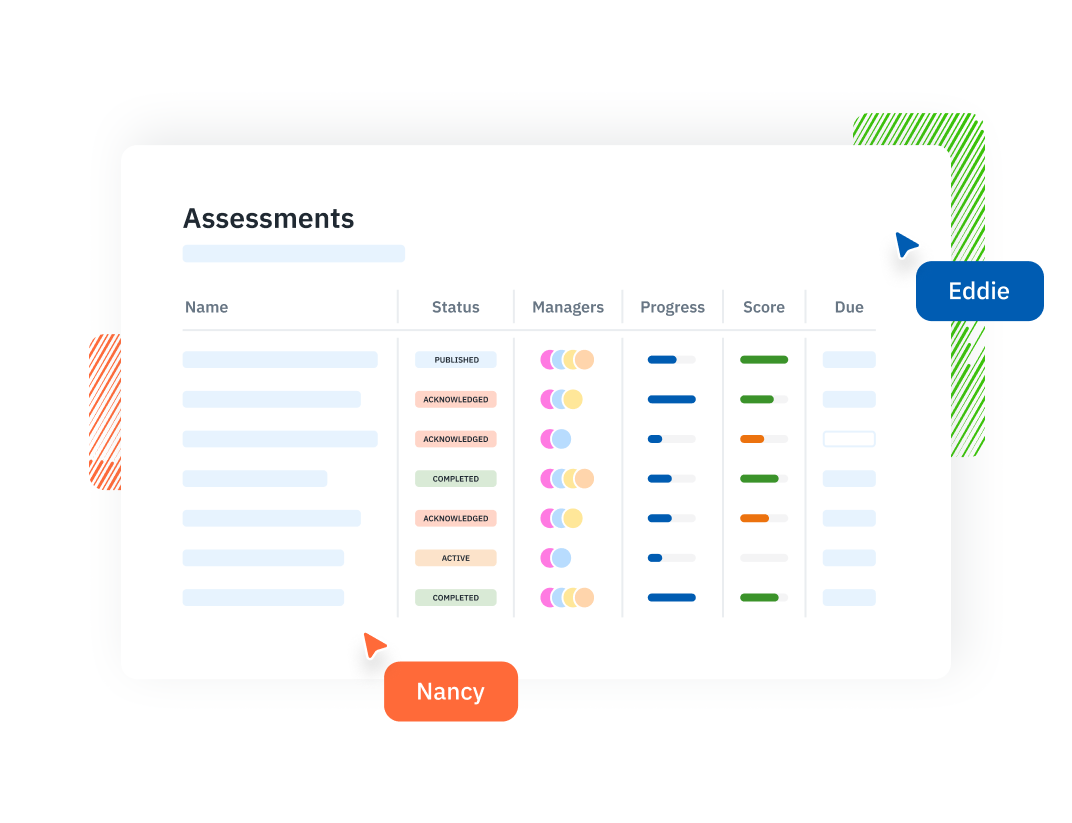
Run structured security assessments across systems, teams, and vendors—all from one place.
Assessment Management
Run structured security assessments across systems, teams, and vendors—all from one place.
 Questionnaires & Surveys
Launch structured questionnaires and collect evidence from the people closest to each control.
Questionnaires & Surveys
Launch structured questionnaires and collect evidence from the people closest to each control.
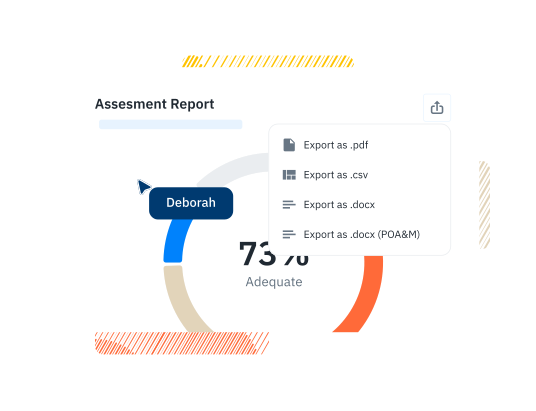
 Reports & Scorecards
Turn assessments into audit-ready reports and actionable insights your team can actually use.
Reports & Scorecards
Turn assessments into audit-ready reports and actionable insights your team can actually use.
 Inventory Management
Maintain a connected inventory of vendors, assets, and systems linked to assessments and risks.
Inventory Management
Maintain a connected inventory of vendors, assets, and systems linked to assessments and risks.
 Exception Management
Log, track, and resolve policy exceptions so nothing falls through the cracks during audits.
Exception Management
Log, track, and resolve policy exceptions so nothing falls through the cracks during audits.
 Risk Management
Turn assessment findings into a living risk register with owners, remediation plans, and full lineage.
Risk Management
Turn assessment findings into a living risk register with owners, remediation plans, and full lineage.
 Information Security Risk Management (ISRM)
Run assessments across units and systems, maintain IT asset inventories, and collaborate on a shared risk register—all in one place.
Information Security Risk Management (ISRM)
Run assessments across units and systems, maintain IT asset inventories, and collaborate on a shared risk register—all in one place.
 Third-Party Security Risk Management (TPSRM)
Track vendors, send security questionnaires, and manage third-party risk with built-in workflows and a centralized inventory.
Third-Party Security Risk Management (TPSRM)
Track vendors, send security questionnaires, and manage third-party risk with built-in workflows and a centralized inventory.






































Launch assessments at each tier using questionnaire templates aligned to NIST SP 800-30, NIST SP 800-37, and NIST SP 800-53. Assess enterprise-level risks, mission and business process dependencies, and system-level vulnerabilities in one workspace. Findings flow into the risk register with tier, scope, likelihood, impact, and ownership already attached.
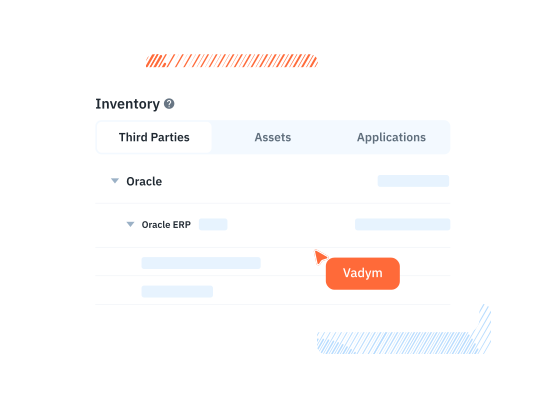
Maintain inventories of systems, applications, vendors, and organizational units, each linked to its assessments, risks, and documentation. Scope a Tier 2 mission assessment or a Tier 3 system assessment by business process, data classification, or criticality, and the inventory records the risk frame and tolerance decisions that apply to each entry. Each risk includes detailed attributes, owners, timelines, and associated controls. Exceptions can be documented with justifications and expiration dates. Leadership gains real time visibility into open risks, response progress, and residual exposure. Mitigation becomes structured, consistent, and tied directly to mission impact.
Apply the risk responses NIST 800-39 defines, whether that is mitigate, accept, avoid, or transfer, with documentation for every decision. Each risk records the assessment that identified it, the tier it applies to, the owner responsible, the timeline for completion, and the compensating controls or justification for acceptance. Exceptions carry rationale and expiration dates, and an append-only audit log records every action.
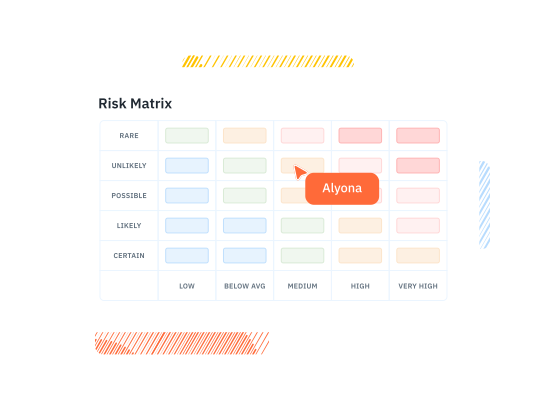
Isora's risk register updates as assessments, inventories, and mitigation plans change. Generate reports showing current risk posture at the enterprise, mission, and system levels, and drill into any summary metric to reach the underlying assessment and evidence. Oversight bodies and auditors get defensible documentation without manual assembly. Enterprise level risks, mission dependencies, and system vulnerabilities flow into one risk register. Findings automatically populate POA&Ms and mitigation workflows, producing a complete picture of likelihood, impact, and ownership. Assessment cycles become repeatable and measurable.