

Woot!
We got your request. Hang on tight and we'll get back to you!
 Assessment Management
Run structured security assessments across systems, teams, and vendors—all from one place.
Assessment Management
Run structured security assessments across systems, teams, and vendors—all from one place.
 Questionnaires & Surveys
Launch structured questionnaires and collect evidence from the people closest to each control.
Questionnaires & Surveys
Launch structured questionnaires and collect evidence from the people closest to each control.
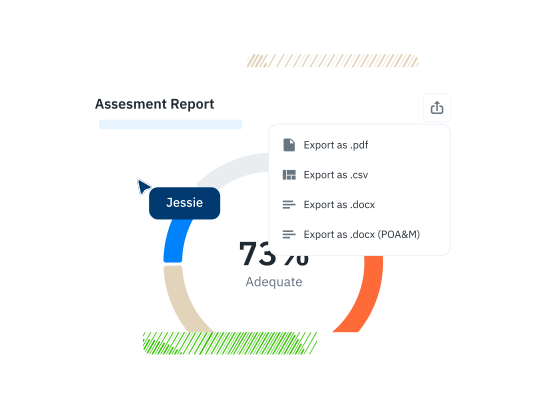
 Reports & Scorecards
Turn assessments into audit-ready reports and actionable insights your team can actually use.
Reports & Scorecards
Turn assessments into audit-ready reports and actionable insights your team can actually use.
 Inventory Management
Maintain a connected inventory of vendors, assets, and systems linked to assessments and risks.
Inventory Management
Maintain a connected inventory of vendors, assets, and systems linked to assessments and risks.
 Exception Management
Log, track, and resolve policy exceptions so nothing falls through the cracks during audits.
Exception Management
Log, track, and resolve policy exceptions so nothing falls through the cracks during audits.
 Risk Management
Turn assessment findings into a living risk register with owners, remediation plans, and full lineage.
Risk Management
Turn assessment findings into a living risk register with owners, remediation plans, and full lineage.
 Information Security Risk Management (ISRM)
Run assessments across units and systems, maintain IT asset inventories, and collaborate on a shared risk register—all in one place.
Information Security Risk Management (ISRM)
Run assessments across units and systems, maintain IT asset inventories, and collaborate on a shared risk register—all in one place.
 Third-Party Security Risk Management (TPSRM)
Track vendors, send security questionnaires, and manage third-party risk with built-in workflows and a centralized inventory.
Third-Party Security Risk Management (TPSRM)
Track vendors, send security questionnaires, and manage third-party risk with built-in workflows and a centralized inventory.
Define system boundaries for FCI and CUI, conduct NIST 800-171 self-assessments across every requirement, link evidence to each response, route findings into POA&Ms, and produce an SPRS score plus assessment documentation from that record, with Isora GRC, the GRC Assessment Platform™ for federal contractors.






































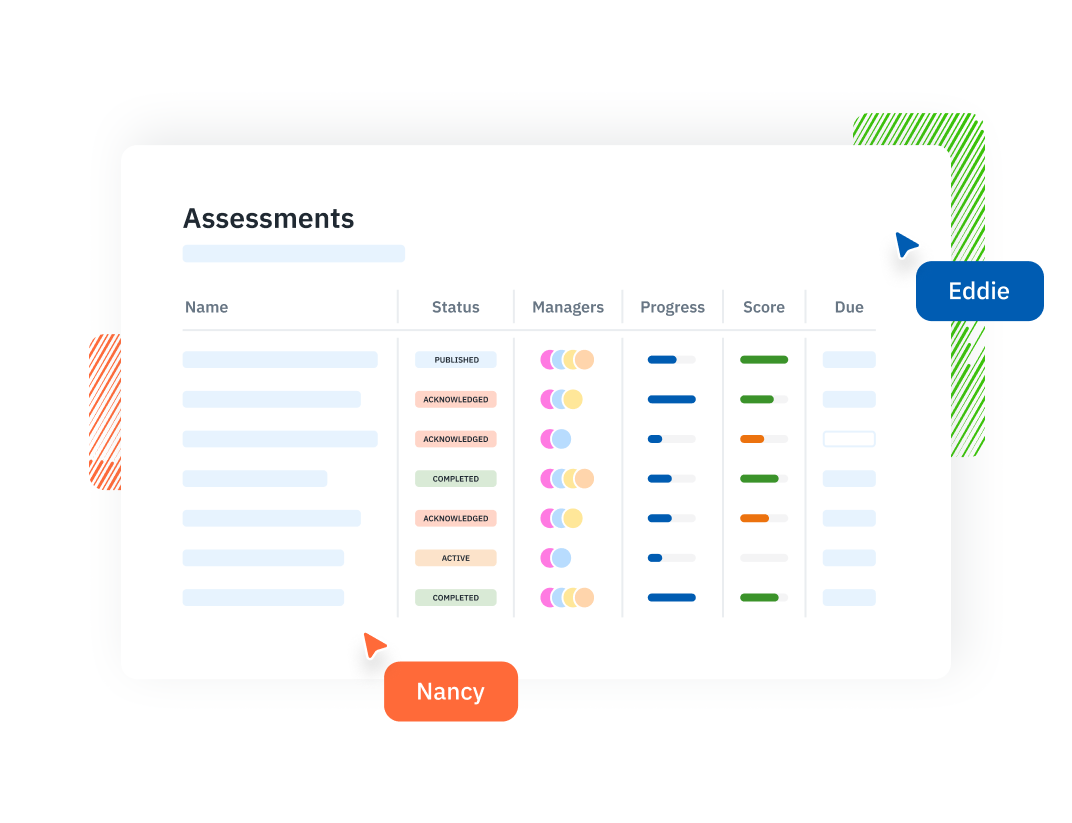
Launch a self-assessment across NIST 800-171 Rev 2 or Rev 3 security controls and assign each requirement to the person responsible for it. Attach documentation to each response to capture evidence and prove implementation status for every security control across revisions.
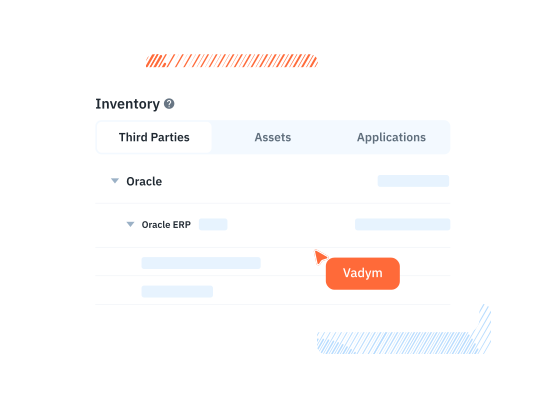
Define the CUI boundary with an inventory of every system and application that stores, processes, or transmits federally classified information (FCI). View data classification, assessment results, and risks for each record to see exactly where CUI resides and which systems the self-assessment should cover.
Publish assessment findings to the risk register as POA&M items that retain their NIST 800-171 requirement, affected CUI system, evidence, and milestone dates. Track remediation against the 180-day closeout window for CMMC Level 2 with SPRS scoring impact that updates as items are closed.
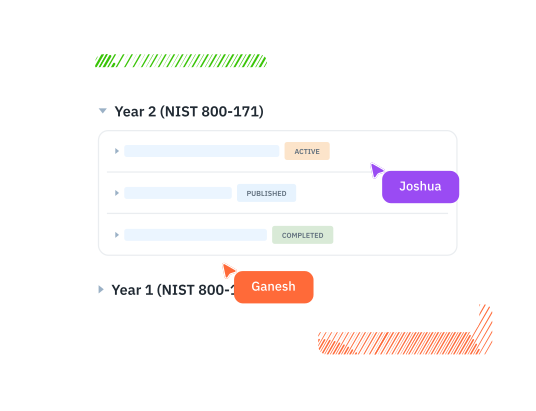
Export documentation behind self-assessments, annual affirmations, and SPRS scores from the assessment record. Trace every result to its responses, evidence, and remediation history in an append-only audit log. Use the same package to answer DIBCAC assessments and prime contractor flow-down requests.