

Woot!
We got your request. Hang on tight and we'll get back to you!
 Assessment Management
Run structured security assessments across systems, teams, and vendors—all from one place.
Assessment Management
Run structured security assessments across systems, teams, and vendors—all from one place.
 Questionnaires & Surveys
Launch structured questionnaires and collect evidence from the people closest to each control.
Questionnaires & Surveys
Launch structured questionnaires and collect evidence from the people closest to each control.
 Reports & Scorecards
Turn assessments into audit-ready reports and actionable insights your team can actually use.
Reports & Scorecards
Turn assessments into audit-ready reports and actionable insights your team can actually use.
 Inventory Management
Maintain a connected inventory of vendors, assets, and systems linked to assessments and risks.
Inventory Management
Maintain a connected inventory of vendors, assets, and systems linked to assessments and risks.
 Exception Management
Log, track, and resolve policy exceptions so nothing falls through the cracks during audits.
Exception Management
Log, track, and resolve policy exceptions so nothing falls through the cracks during audits.
 Risk Management
Turn assessment findings into a living risk register with owners, remediation plans, and full lineage.
Risk Management
Turn assessment findings into a living risk register with owners, remediation plans, and full lineage.
 Information Security Risk Management (ISRM)
Run assessments across units and systems, maintain IT asset inventories, and collaborate on a shared risk register—all in one place.
Information Security Risk Management (ISRM)
Run assessments across units and systems, maintain IT asset inventories, and collaborate on a shared risk register—all in one place.
 Third-Party Security Risk Management (TPSRM)
Track vendors, send security questionnaires, and manage third-party risk with built-in workflows and a centralized inventory.
Third-Party Security Risk Management (TPSRM)
Track vendors, send security questionnaires, and manage third-party risk with built-in workflows and a centralized inventory.






































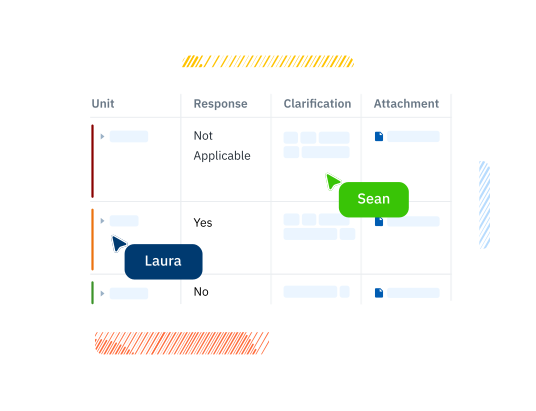
Launch structured assessments using prebuilt questionnaires aligned to NIST SP 800-53 control families and SCIO-SEC policies 301–318. Target agency departments, systems, and data repositories, and collect access control documentation, encryption records, and incident response procedures inline with each response. Recurring campaigns cover both the annual assessment requirement and the three-year independent assessment cycle.
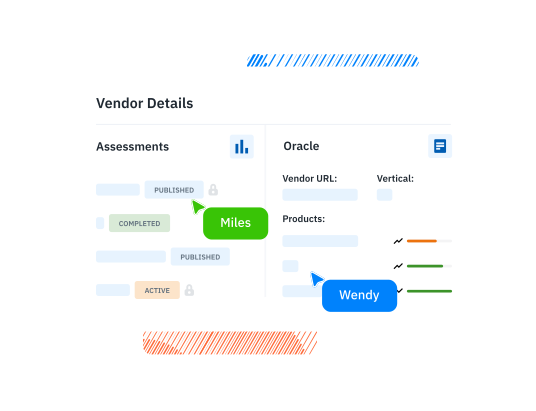
Link every system, application, and vendor record to its assessments, risks, POA&Ms, and documentation. Track Vendor Readiness Assessment Reports (VRARs) and third-party attestations (FedRAMP, SOC 2, ISO 27001) in the same workspace. When procurement or ESRMO asks about a vendor's security posture, the VRAR, assessment history, and risk rating are already connected.
Publish control gaps straight from the assessment to the risk register and POA&M tracker. Every finding carries lineage across the SCIO-SEC policy it maps to, the NIST 800-53 control it references, the assessment that surfaced it, and the system it applies to. Assign owners, set remediation milestones, and track progress toward the 30-day ESRMO submission window.
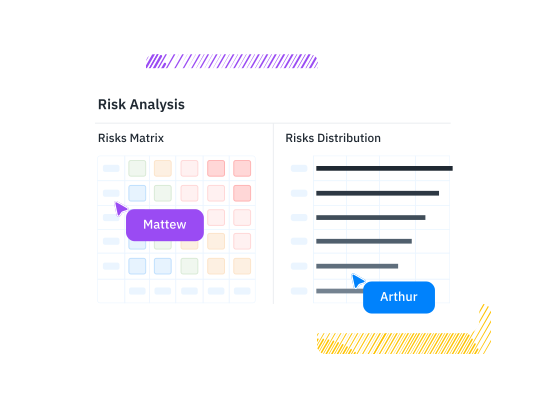
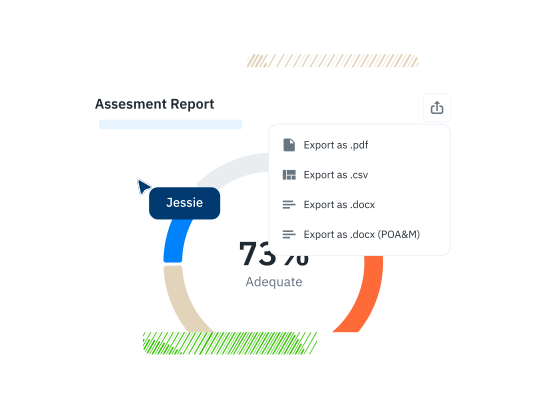
Generate reports that pull from live assessment scores, POA&M status, risk register entries, and inventory records to show control implementation, remediation progress, and program maturity across the agency. Outputs align to EGRC submission requirements and SCIO-SEC policy families, and export in formats ready for ESRMO review, State CIO oversight, and agency leadership.