

Woot!
We got your request. Hang on tight and we'll get back to you!
 Assessment Management
Run structured security assessments across systems, teams, and vendors—all from one place.
Assessment Management
Run structured security assessments across systems, teams, and vendors—all from one place.
 Questionnaires & Surveys
Launch structured questionnaires and collect evidence from the people closest to each control.
Questionnaires & Surveys
Launch structured questionnaires and collect evidence from the people closest to each control.
 Reports & Scorecards
Turn assessments into audit-ready reports and actionable insights your team can actually use.
Reports & Scorecards
Turn assessments into audit-ready reports and actionable insights your team can actually use.
 Inventory Management
Maintain a connected inventory of vendors, assets, and systems linked to assessments and risks.
Inventory Management
Maintain a connected inventory of vendors, assets, and systems linked to assessments and risks.
 Exception Management
Log, track, and resolve policy exceptions so nothing falls through the cracks during audits.
Exception Management
Log, track, and resolve policy exceptions so nothing falls through the cracks during audits.
 Risk Management
Turn assessment findings into a living risk register with owners, remediation plans, and full lineage.
Risk Management
Turn assessment findings into a living risk register with owners, remediation plans, and full lineage.
 Information Security Risk Management (ISRM)
Run assessments across units and systems, maintain IT asset inventories, and collaborate on a shared risk register—all in one place.
Information Security Risk Management (ISRM)
Run assessments across units and systems, maintain IT asset inventories, and collaborate on a shared risk register—all in one place.
 Third-Party Security Risk Management (TPSRM)
Track vendors, send security questionnaires, and manage third-party risk with built-in workflows and a centralized inventory.
Third-Party Security Risk Management (TPSRM)
Track vendors, send security questionnaires, and manage third-party risk with built-in workflows and a centralized inventory.
Isora GRC gives security teams one connected workspace to run assessments, manage vendors and assets, track risks, and prove compliance. Replace spreadsheets and GRC tools that never fully deployed with structured workflows built for information security teams.




































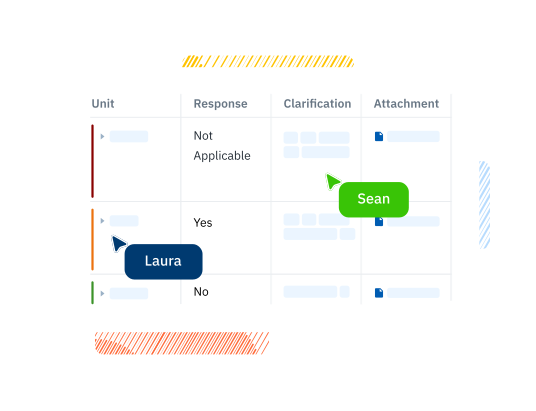
Distribute assessments across departments, systems, and vendors using customizable questionnaires aligned to NIST, HIPAA, GLBA, CIS, and more. Track completion in real time and connect findings directly to your risk register.
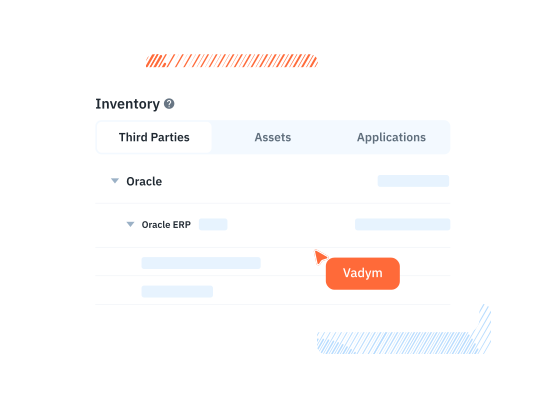
Track IT assets, data owners, and third-party vendors in one place. Every inventory item links to its assessment history, associated risks, and data classification, so you always have a defensible answer when auditors ask.
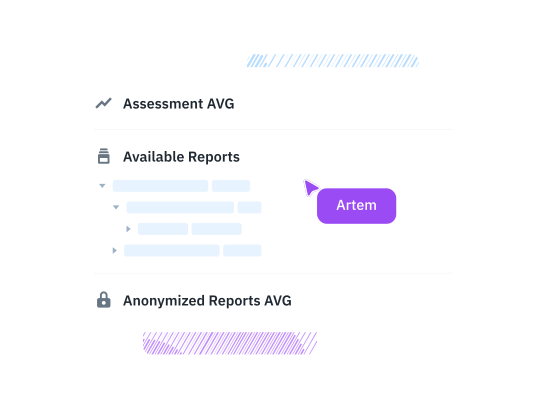
Reports and scorecards pull from live assessment data with drill-down to individual responses and evidence. Share compliance posture with leadership or auditors without manual compilation.
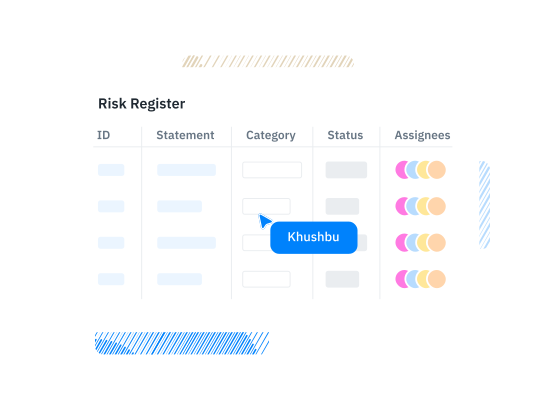
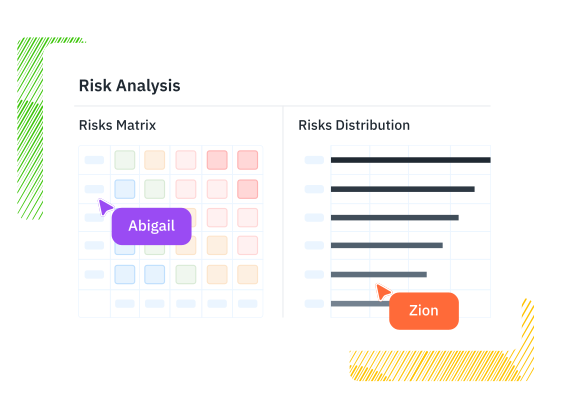
Findings flow directly into a collaborative risk register with full lineage from questionnaire to control to risk. Assign owners, track remediation, and maintain a real-time view of your organization's risk posture.