

Woot!
We got your request. Hang on tight and we'll get back to you!
 Assessment Management
Run structured security assessments across systems, teams, and vendors—all from one place.
Assessment Management
Run structured security assessments across systems, teams, and vendors—all from one place.
 Questionnaires & Surveys
Launch structured questionnaires and collect evidence from the people closest to each control.
Questionnaires & Surveys
Launch structured questionnaires and collect evidence from the people closest to each control.
 Reports & Scorecards
Turn assessments into audit-ready reports and actionable insights your team can actually use.
Reports & Scorecards
Turn assessments into audit-ready reports and actionable insights your team can actually use.
 Inventory Management
Maintain a connected inventory of vendors, assets, and systems linked to assessments and risks.
Inventory Management
Maintain a connected inventory of vendors, assets, and systems linked to assessments and risks.
 Exception Management
Log, track, and resolve policy exceptions so nothing falls through the cracks during audits.
Exception Management
Log, track, and resolve policy exceptions so nothing falls through the cracks during audits.
 Risk Management
Turn assessment findings into a living risk register with owners, remediation plans, and full lineage.
Risk Management
Turn assessment findings into a living risk register with owners, remediation plans, and full lineage.
 Information Security Risk Management (ISRM)
Run assessments across units and systems, maintain IT asset inventories, and collaborate on a shared risk register—all in one place.
Information Security Risk Management (ISRM)
Run assessments across units and systems, maintain IT asset inventories, and collaborate on a shared risk register—all in one place.
 Third-Party Security Risk Management (TPSRM)
Track vendors, send security questionnaires, and manage third-party risk with built-in workflows and a centralized inventory.
Third-Party Security Risk Management (TPSRM)
Track vendors, send security questionnaires, and manage third-party risk with built-in workflows and a centralized inventory.






































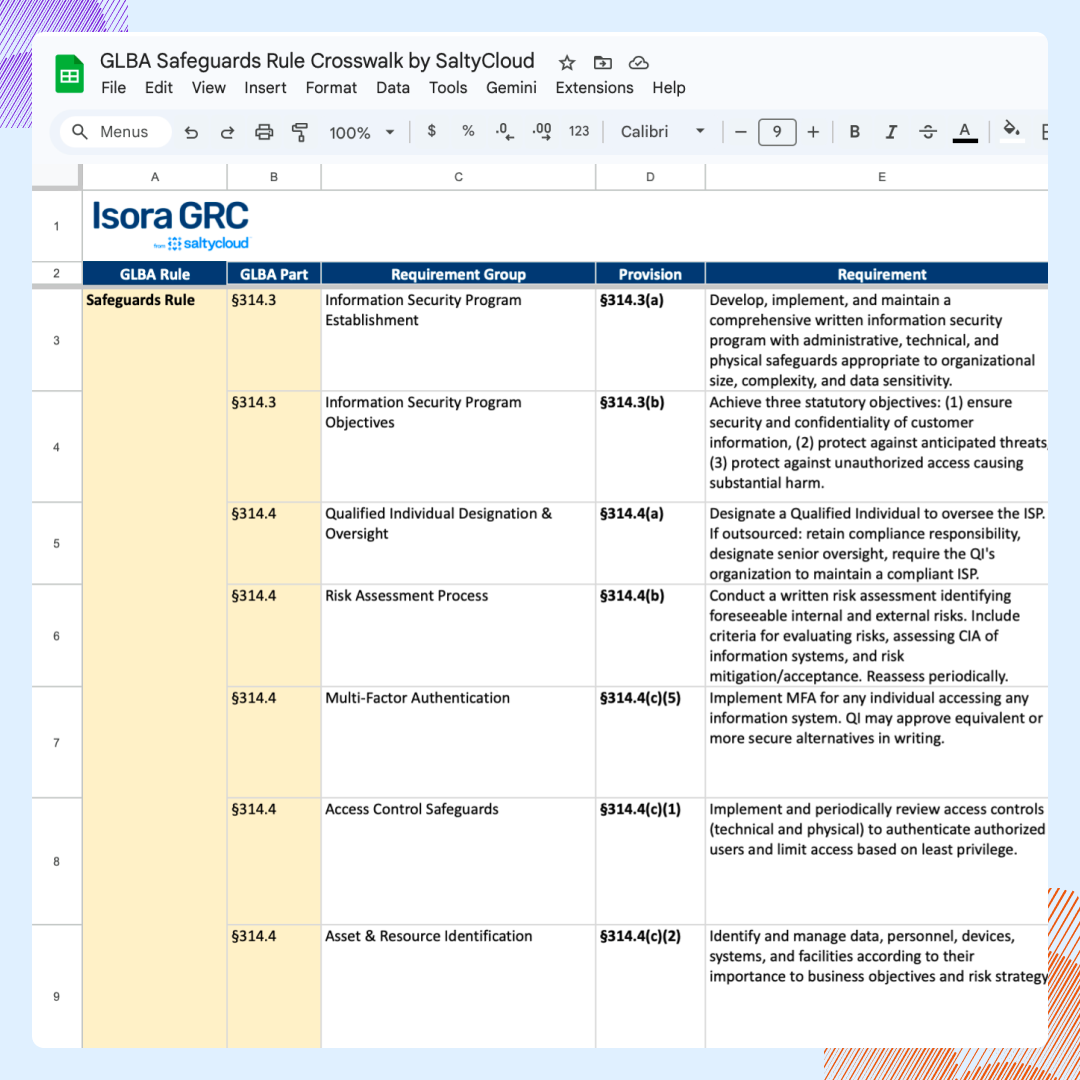
Launch assessments mapped to Safeguards Rule requirements using prebuilt GLBA questionnaires, and target departments, applications, and data repositories across the organization. As owners respond, attach access control policies, encryption documentation, and incident response procedures directly to each requirement. The completed assessment shows status by requirement, department, and system, with the supporting evidence preserved alongside each response.
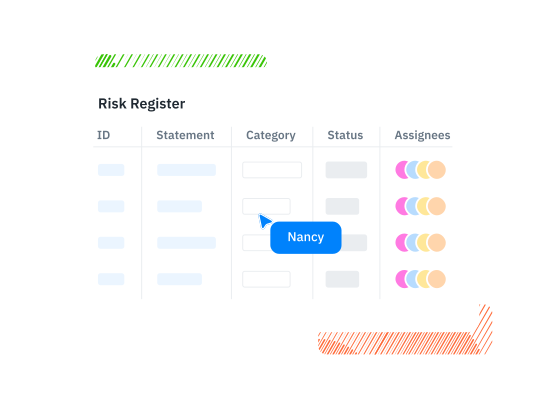
Maintain a vendor inventory where each record links to its security questionnaire, assessment results, risk rating, and contract documentation. Track which vendors access customer information, when each was last assessed, and what its current risk posture is. When an examiner asks which service providers touch customer PII, the answer is one search away.
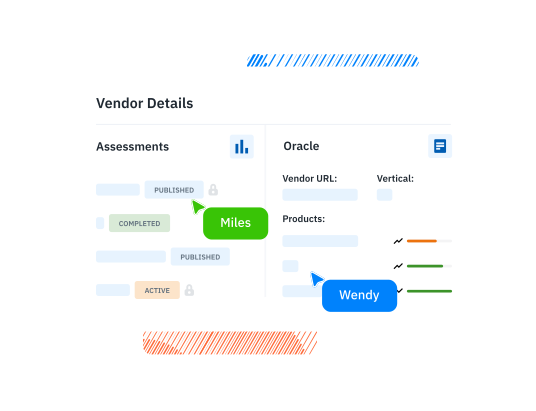
Publish assessment findings to the risk register with the assessment that found them, the requirement they map to, and the system they affect. Assign owners, set remediation deadlines, and document closeout while the append-only audit log records every action. An unencrypted database, a vendor without a current SOC 2, or an unreviewed access control policy becomes a tracked item instead of a note in last year's spreadsheet.
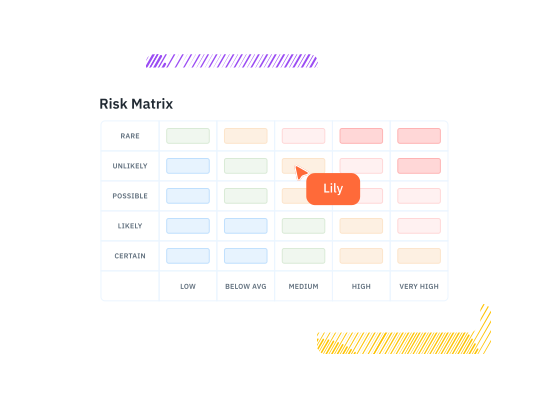
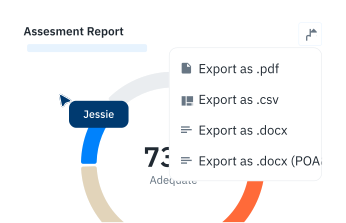
Export reports that pull directly from assessment data, risk register entries, and vendor records. Show assessment completion, control status, risk ratings by system, and remediation progress, each traceable to the underlying responses and evidence in an append-only audit log. The same package answers FTC examinations and annual board reporting.