

Woot!
We got your request. Hang on tight and we'll get back to you!


 Assessment Management
Run structured security assessments across systems, teams, and vendors—all from one place.
Assessment Management
Run structured security assessments across systems, teams, and vendors—all from one place.
 Questionnaires & Surveys
Collect the evidence you need with targeted questionnaires tailored to compliance and risk workflows.
Questionnaires & Surveys
Collect the evidence you need with targeted questionnaires tailored to compliance and risk workflows.
 Reports & Scorecards
Turn assessments into audit-ready reports and actionable insights your team can actually use.
Reports & Scorecards
Turn assessments into audit-ready reports and actionable insights your team can actually use.
 Inventory Management
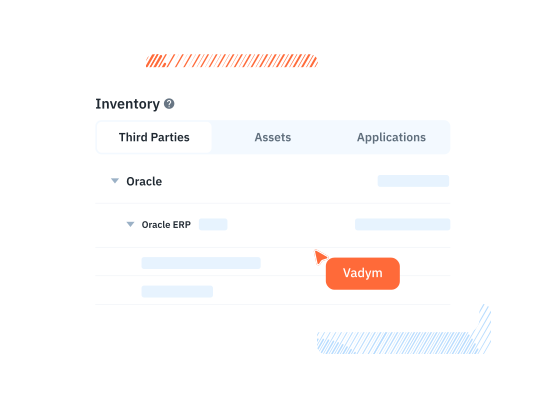
Maintain real-time inventories of IT assets, systems, and third parties to support risk and compliance.
Inventory Management
Maintain real-time inventories of IT assets, systems, and third parties to support risk and compliance.
 Exception Management
Log, track, and resolve policy exceptions so nothing falls through the cracks during audits.
Exception Management
Log, track, and resolve policy exceptions so nothing falls through the cracks during audits.
 Risk Management
Identify, document, and mitigate security risks with workflows that bring clarity and accountability.
Risk Management
Identify, document, and mitigate security risks with workflows that bring clarity and accountability.
 Information Security Risk Management (ISRM)
Run assessments across units and systems, maintain IT asset inventories, and collaborate on a shared risk register—all in one place.
Information Security Risk Management (ISRM)
Run assessments across units and systems, maintain IT asset inventories, and collaborate on a shared risk register—all in one place.
 Third-Party Security Risk Management (TPSRM)
Track vendors, send security questionnaires, and manage third-party risk with built-in workflows and a centralized inventory.
Third-Party Security Risk Management (TPSRM)
Track vendors, send security questionnaires, and manage third-party risk with built-in workflows and a centralized inventory.



































NIST 800 39 begins with framing risk at the organizational level. Isora GRC provides a centralized workspace to document governance structures, risk tolerance, roles, and assumptions. Risk decisions from leadership cascade into assessments and system controls automatically. Organizations maintain a consistent risk baseline that informs all tiers, creating clarity for executives, mission owners, and system teams. As missions evolve or new threats emerge, updates to the risk frame flow across the platform, ensuring governance remains active instead of static.
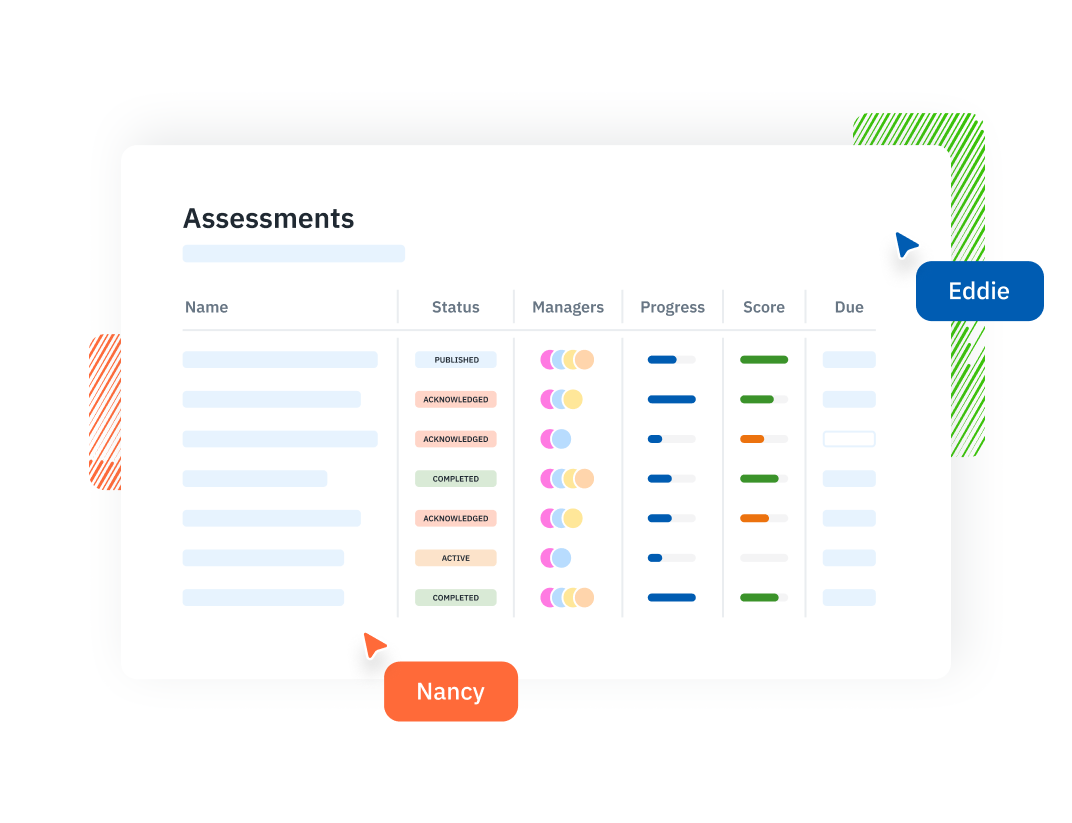
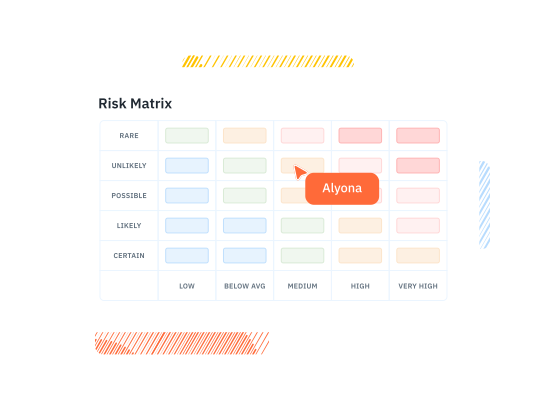
NIST 800 39 requires an integrated assessment process across Tier 1, Tier 2, and Tier 3. Isora GRC supports this with connected assessment templates aligned with NIST 800 30, the RMF, and SP 800 53. Enterprise level risks, mission dependencies, and system vulnerabilities flow into one risk register. Findings automatically populate POA&Ms and mitigation workflows, producing a complete picture of likelihood, impact, and ownership. Assessment cycles become repeatable and measurable.
Isora GRC enables organizations to apply the risk response strategies defined in NIST 800 39. Risks can be mitigated, accepted, avoided, or transferred with full audit trails. Each risk includes detailed attributes, owners, timelines, and associated controls. Exceptions can be documented with justifications and expiration dates. Leadership gains real time visibility into open risks, response progress, and residual exposure. Mitigation becomes structured, consistent, and tied directly to mission impact.
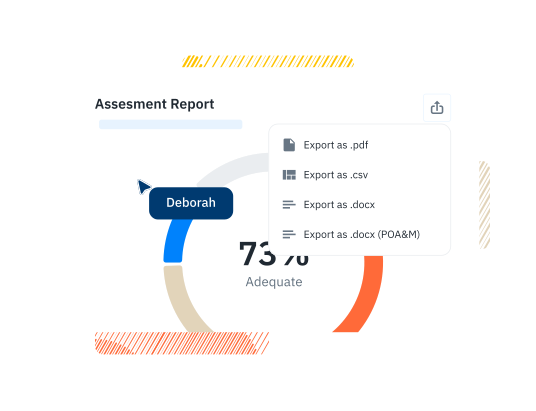
NIST 800 39 defines risk management as a continuous cycle. Isora GRC supports ongoing monitoring with dashboards, automated updates, and structured reporting. As assessments, inventories, and mitigation plans evolve, the risk register updates automatically. Organizations generate reports that reflect real time posture at the enterprise, mission, and system levels. Evidence stays connected. Oversight bodies and auditors receive complete, defensible documentation without manual assembly.